


Sustainable Supply Chain Management
SUSTAINABLE SUPPLY CHAIN MANAGEMENT
Challenges, Risks,
and Impacts
Thaioil Group procurement has placed an emphasis on sustainable supply chain management as the Company has several procurements with domestic and international partners
The potential opportunities and impacts on Environment, Social, and Governance or “ESG” must be considered as the key factors for business operations and continuity. At the same time, the Company strives to enhance the quality of life and generate sustainable returns for all stakeholders. To ensure the effective risk management in procurement process, therefore, the Company has assigned the procurement function to analyze and assess risks in various areas for all products and services on a regular basis, such as supply risks and sustainability risks. This approach enables the Company to identify the potential risks and challenges that may arise. As a result, the example of challenges from the Company’s supply chain is suppliers with high sustainability risks. They can pose negative impacts on the Company, therefore resolving these sustainability risks before allowing those suppliers into the procurement processes is necessary. However, in the case that the Company discovers the sustainability risks during the operations, the Company will investigate the issue with the suppliers. If the supplier has the sustainability risk, the Company will issue a clear corrective action plan with a specific timeframe for the supplier to take corrective actions immediately.
Furthermore, the Company has established a grievance mechanism for suppliers to raise concerns and complain during the procurement process. To ensure transparency and ethical business practices, this mechanism has been posted on Thaioil Group’s website and governed under the internal audit process.


Thaioil Group is committed to implementing sustainable procurement practices in line with Thaioil Group’s Sustainability Management Framework. This framework takes into account sustainable business, including Economic, Environmental, Social, and Governance aspects.
Together with the procurement principles of Clear, Fair, and Professional. This aims to integrate the procurement process to contribute towards achieving business strategies in accordance with international standards of ISO 20400: Sustainable Procurement. This will minimize the chance of business disruption and delays caused by unforeseen events. At the same time, it will optimize the resource efficiency management to gain competitive advantage, create long-term mutual benefits for Thaioil Group and its suppliers, and maintain trust for all stakeholders. Therefore, the Company has determined key performance indicators (KPIs) in line with the Company’s performance as follows:
Targets

Strategic or significant suppliers acknowledged the SCOC
Targets 2024
100%
Long-term Targets 2026
100%
Key suppliers acknowledged the SCOC
Targets 2024
85%
Long-term Targets 2026
90%
New registered suppliers acknowledged the SCOC
Targets 2024
100%
Long-term Targets 2026
100%
Strategic or significant suppliers acknowledged the SCOC
Targets 2024
100%
Long-term Targets 2026
100%
Key suppliers acknowledged the SCOC
Targets 2024
85%
Long-term Targets 2026
90%
New registered suppliers acknowledged the SCOC
Targets 2024
100%
Long-term Targets 2026
100%

Number of proven complaints received from procurement process in the significant procurement projects.
Targets 2024
0
case
Long-term Targets 2026
0
case
Strategic or significant suppliers received a comprehensive ESG risk assessment
Targets 2024
90%
Long-term Targets 2026
100%
Number of proven complaints received from procurement process in the significant procurement projects.
Targets 2024
0
case
Long-term Targets 2026
0
case
Strategic or significant suppliers received a comprehensive ESG risk assessment
Targets 2024
90%
Long-term Targets 2026
100%

Overall supplier satisfaction towards Thaioil Group
Targets 2024
More than 90%
Long-term Targets 2026
95%
Supplier satisfaction towards Thaioil Group
2023 Targets
More than 90
Long-term Targets
95%
Management Approach and Performance
กลุ่มไทยออยล์ให้ความสำคัญต่อการเปิดเผยผลการดำเนินงานอย่างโปร่งใสผ่านการรายงานและการติดตามตรวจสอบความสำเร็จตามเป้าหมายเพื่อสร้างความเชื่อมั่นต่อผู้มีส่วนได้ส่วนเสีย จากการประเมินประเด็นที่สำคัญต่อความยั่งยืน (Materiality Assessment) ไทยออยล์ได้ตั้งเป้าหมายการดำเนินงานในระยะยาวของ 3 เรื่องสำคัญ (Material issue) ซึ่งส่งผลกระทบต่อองค์กรสูงที่สุดและสามารถสร้างคุณค่าต่อองค์กรในระยะยาว ดังนี้
Non-hydrocarbon Suppliers
Suppliers Management


1.Business Excellence
The Company establishes a robust platform and adopts technology to enhance the efficiency of modern working processes, such as:
- Procurement One Platform Development: The Company has integrated the data and operations on multiple systems into one platform. This increases the speed of data analysis and enhances the modern working processes.
- Category Development: The Company has strengthened the procurement process by implementing a Procurement Management Review (PMR). This is a strategy to save the cost from the procurement of goods and services.
2. Sustainability & Partnership Enrichment
The Company strengthens collaboration with suppliers together with conducting excellent and fair sustainable procurement to create shared value in terms of ESG and innovation. The initiatives include:
- ESG Enhancement: The Company has collaborated with stakeholders, such as suppliers and business partners, to integrate ESG into procurement process. Moreover, the Company has elevated the relationship with suppliers to create ESG value together.
- Green Procurement: The Company has promoted the circular economy strategy, called “Thaioil CE WE GO,” in Green Procurement. Green procurement has been implemented to stimulate the suppliers to develop their production process that produces environmentally friendly products and to avoid the negative environmental impacts across the supply chain.
- Long-Term Partnerships: The Company has focused on the strategic suppliers and collaboration with PTT Group to increase the power of negotiation.
Sustainable supply chain management strategy
1. People: the personnel of the procurement function, internal stakeholders, and suppliers will be developed to support the Company’s sustainability (ESG) targets.
2. Patronage: To deliver added values to meet the expectations of suppliers.
3. Platform: To implement reliable and global technology systems, such as SAP Ariba, and DocuSign, to improve business operations with suppliers. This aims to enhance accuracy, speed, clarity, and fairness for all suppliers towards the digital workplace.
4. Partner: To build partnerships with business partners and formulate key performance indicators (KPIs) in accordance with the Company’s targets.

1. Supplier Portfolio Management
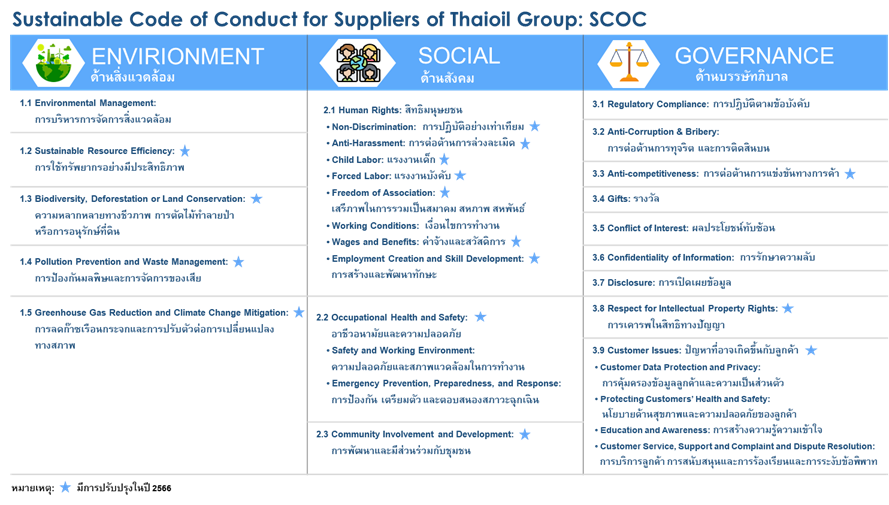
To ensure that the procurement of products and services is efficient and aligned with the corporate strategic target. The Company has started with the step of supplier portfolio management that Thaioil has the business with. This step involved encouraging suppliers to adhere to the Sustainable Code of Conduct for Suppliers of Thaioil Group (SCOC), which covers three dimensions: Environmental, Social, and Governance (ESG). The purpose is to drive towards sustainable supply chain management, enhance strategic cooperation, and create long-term growth with suppliers. Therefore, new registered suppliers must acknowledge and comply with the SCOC.
In 2023, Thaioil Group reviewed and amended the SCOC to align with international standards and the changing global landscape. To ensure that all suppliers understand the SCOC, the Company has communicated the SCOC through Thaioil Group’s website and the annual supplier seminar.

Sustainable Code of Conduct for Suppliers of Thaioil Group (SCOC)

2024
Performances

For non-hydrocarbon suppliers, Thaioil Group has conducted the supplier selection process through the Ariba System, which embeds the supplier selection criteria in a preliminary supplier assessment form. The criteria include the preliminary assessment of the quality of products and services, and supplier’s financial status. In addition, it includes the assessment of sustainable procurement on ESG aspects, consisting of product delivery information, safety management, SCOC acknowledgement, third-party verification such as ISO9001, ISO14001, ISO/IEC17025, OHSAS18001, and ISO50001. In addition, there is a data verification process to examine policies and corruption prevention measures for the suppliers who potentially have corporate governance risks, such as the suppliers who are working with government agencies.
2. Supplier Screening
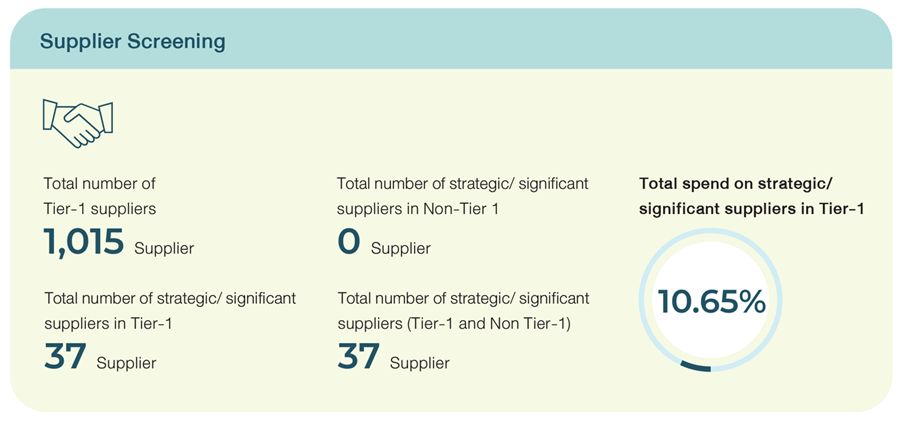
To operate the business in accordance with the strategy of products and services, Thaioil Group classifies Tier-1 Suppliers based on business relevance analysis, spending analysis and the combination of sustainability risk and supply risk. These analyses are vital tools for Thaioil to explore the opportunity in cost reduction, risk management, and enhancing procurement efficiency. Furthermore, these analyses serve as the foundation of the supplier screening. The data from the analysis result can provide an overview of corporate expenditure and promote the efficiency improvement, contract compliance, and cost management within the Company.
To identify supplier sustainability risks, Thaioil Group conducts supplier sustainability risk identification, covering ESG dimensions, based on analysis of country-specific risk, sector-specific risks, and commodity-specific risks, in accordance with Sustainable Procurement Guidance (ISO20400). Once the sustainability risks have been identified, an analysis to compile a summary of the risks associated with each supplier will be conducted. Finally, the result of supplier risk identification will be used to manage potential sustainability risks and select the suppliers for further supplier assessment process.
Additionally, Thaioil Group classifies Significant Tier-1 Suppliers, who directly supply goods or services to Thaioil Group, based on specific criteria as the following.
- Strategic suppliers with high importance to Thaioil business.
- Very High/High ESG Risk Suppliers
Lastly, Thaioil Group also places importance on Significant Non-Tier 1 Suppliers, who do not directly supply products or services to Thaioil Group, but they supply products or services to our Significant Tier-1 Suppliers.
Thaioil Group’s Non-hydrocarbon Suppliers
For non-hydrocarbon suppliers, Thaioil Group has conducted the supplier selection process through the Ariba System, which embeds the supplier selection criteria in a preliminary supplier assessment form. The criteria include the preliminary assessment of the quality of products and services, and supplier’s financial status. In addition, it includes the assessment of sustainable procurement on Environmental, Social, and Governance (ESG) aspects, consisting of product delivery information, safety management, SCOC acknowledgement, third-party verification such as ISO9001, ISO14001, ISO/IEC17025, OHSAS18001, and ISO50001. In addition, there is a data verification process to examine policies and corruption prevention measures for the suppliers who potentially have corporate governance risks, such as the suppliers who are working with government agencies.
The post evaluation of suppliers after delivering products and services is conducted through the systems in which the methods will differ based on the priority of products and services. The sustainability topics are integrated into the evaluation criteria, such as the Security, Safety, Health, and Environment (SSHE) management and ESG management as well as the compliance with laws and regulations on the transportation of product and services, and the delivery of hazardous goods.
To align with the strategy, Thaioil Group classifies Tier-1 suppliers into three groups as follows:
1) Strategic/Significant Supplier: suppliers that are potential and significant to the Company to develop towards collaboration and mutual growth.
2) Key Supplier: suppliers that must maintain a long-term relationship to control costs or expenses that may increase in the future and require potential risk management.
3) Managed Supplier: suppliers are managed by relationships based on their performance.
Moreover, the Company classifies strategic/significant non-tier 1 supplier that provides products and services to the Tier-1 suppliers, whose products and services are considered of critical significance to our businesses.
Risk Management in Supply Chain
Risk Assessment
Risk Management
Supplier Assessment
1) Supplier Desk Assessment: The Company examined the certificates and assessment report issued by the Independent Accredited Auditing Body, including ISO14001, ISO50001, ISO45001, OHSAS18001, ISO9001, ISO17025, ISO27001, Green Industry Standard assessments by the Ministry of Industry, and certifications from the Thai Private Sector Collective Action Against Corruption (CAC), Corporate Social Responsibility, and the Department of Industrial Work Award (CSR-DIW Award) by the Ministry of Industry etc.
2) Supplier On-Site Assessments – Thaioil Group conducted on-site supplier assessments on sustainability topic, classified into two types as follows:
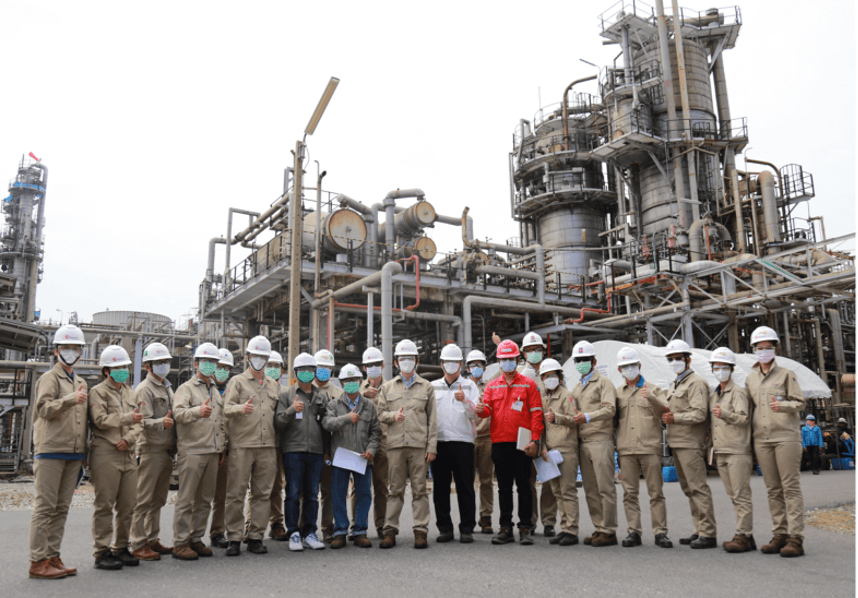
2.1) 2nd Party Supplier On-site Assessments: The onsite assessments are conducted by Thaioil Group’s internal functions. For example, Waste Management Audits are conducted by Thaioil Group’s environmental team at the supplier’s site. Security, Safety, Occupational Health, and Environment (SSHE) practices are assessed by Thaioil Group’s safety team while the suppliers are working in Thaioil Group’s operational area. Meanwhile, compliance with contractual requirement and relevant regulations of the suppliers in Thaioil Group’s operational area will be assessed by end-user functions, operational functions, and safety functions. Moreover, during major turnaround (MTA), Thaioil Group’s executives will participate in on-site assessments with suppliers, Management Site Walk program, to ensure that significant suppliers comply with the SCOC.
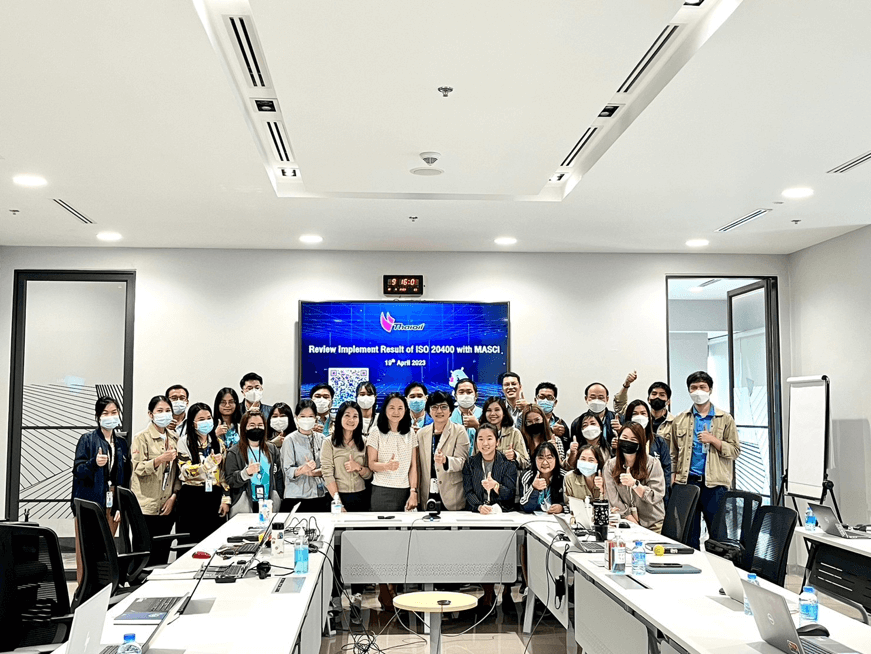
2.2) 3rd Party Supplier On-site Assessments: The Company conducts onsite supplier assessment by Third Party Auditing Organizations that are accredited by the Standard-Setting Organization. In 2023, Thaioil Group collaborated with the Management System Certification Institute (MASCI), which is a network institute of the Ministry of Industry and operates under the Foundation for Industrial Development, to assess the Company’s sustainable management practices of suppliers who have high ESG risks and/or being the strategic/ significant suppliers. These on-site assessments are conducted based on the criteria developed from ISO20400: Sustainable Procurement to evaluate Environmental, Social, and Governance (ESG) aspects at the suppliers’ sites.

2024
Performances

Supplier and Employee Capacity Building
Supplier Development and Capacity Building ProgramThaioil Group strives to develop and enhance the supplier capacity in sustainability management, covering ESG aspects, across its supply chain. The Company has regularly communicated knowledge, Supplier ESG programs, procurement procedures, and Thaioil Group commitment to all suppliers through various channels, such as annual supplier seminars, practical and theoretical trainings, and Thaioil Group’s website. Also, the Company has publicized ESG news through the Company’s Facebook pages and Supplier Relationship Management (SRM) Newsletters via Emails.
In 2023, Thaioil communicated information and conducted Supplier ESG Programs as follows:
Vel pretium dolor tellus id purus felis tellus cursus. Amet turpis vel enim aliquet maecenas. Egestas nulla urna suspendisse cursus aliquam mauris facilisis.

Thaioil’s supplier seminar

Thaioil Group SSHE Training Center

Safe White Green Program

The Green Industry

ISO 20400 Sustainable Procurement Training for Suppliers

E-procurement Training Program

A three-year collaborative academic cooperation agreement program with partners

PTT Group CG Day

Thaioil Group organizes relationship building activities for suppliers

Supplier ESG On-Site Assessment 2023
3. Source to Contract Process
Thaioil Group recognizes the importance of sustainability and participation to create a sustainable society. Consequencely, Thaioil has integrated ESG principles into each step of its procurement processes to ensure that its suppliers strictly comply with Thaioil’s sustainability policy and strategy, as in the following example.
- Integration of sustainability criteria or qualifications into procurement-related documents or requirements to mitigate potential ESG risks that may impact business operations during the sourcing of products and services.
- Applying ESG requirements into the contracting process of suppliers to ensure that suppliers will adhere to sustainability requirements throughout the contract duration. Moreover, after signing the contract, the Company also continuously evaluates suppliers and monitors their ESG performance throughout the contract duration to ensure that suppliers still comply with Thaioil’s ESG requirements.
- The post evaluation of suppliers after delivering products and services is conducted based on the priority of products and services. The sustainability topics are integrated into the evaluation criteria, such as the Security, Safety, Health, and Environment (SSHE) management and ESG management as well as the compliance with laws and regulations on the transportation of product and services, and the delivery of hazardous goods.
4. Supplier Assessment and Development
4.1 Supplier Assessment
Thaioil Group is committed to conducting supplier assessment on sustainability topics and promoting suppliers’ capacity on ESG management. The Company has established a long-term plan to proactively evaluate the strategic suppliers, based on the analysis results of suppliers who pose operational risks. This helps manage risks within the supply chain and achieve 100% of strategic supplier assessment on ESG risks by 2026.
In 2024, Thaioil Group conducted a supplier assessment on ESG risks as follows.
1. Supplier Desk Assessment: the Company examined the certificates and assessment report issued by the Independent Accredited Auditing Body, including ISO14001, ISO50001, ISO45001, OHSAS18001, ISO9001, ISO17025, ISO27001, Green Industry Standard assessments by the Ministry of Industry of Thailand, and the certifications from the Thai Private Sector Collective Action Against Corruption (CAC), Corporate Social Responsibility, and the Department of Industrial Work Award (CSR-DIW Award) by the Ministry of Industry etc.
2. Supplier On-Site Assessments – Thaioil Group conducted on-site supplier assessments on sustainability topic, classified into two types as follows:
- 2nd Party Supplier On-site Assessments: The onsite assessments are conducted by Thaioil Group’s internal functions. For example, Waste Management Audits are conducted by Thaioil Group’s environmental team at the supplier’s site. Security, Safety, Occupational Health, and Environment (SSHE) practices are assessed by Thaioil Group’s safety team while the contractors are working in Thaioil Group’s operational area. Meanwhile, compliance with contractual requirement and relevant regulations of the suppliers in Thaioil Group’s operational area will be assessed by end-user functions, operational functions, and safety functions. Moreover, during major turnaround (MTA), Thaioil Group’s executives will participate in on-site assessments with contractors, Management Site Walk program, to ensure that significant suppliers comply with the SCOC.
- 3rd Party Supplier On-site Assessment: The Company conducts onsite supplier assessment by Third Party Auditing Organizations that are accredited by the Standard-Setting Organization. In 2024, Thaioil Group collaborated with the Management System Certification Institute (MASCI), which is a network institute of the Ministry of Industry of Thailand, and operates under the Foundation for Industrial Development, to assess the Company’s sustainable management practices of suppliers who have high ESG risks and/or being the strategic/ significant suppliers. These on-site assessments are conducted based on the criteria developed from ISO20400: Sustainable Procurement to evaluate ESG aspects at the suppliers’ sites.
After supplier assessment, if any suppliers fail to pass or meet the assessment standards, Thaioil Group will work with the suppliers through online (remote) and onsite meetings to help them develop their corrective actions and improvement plan and provide them with the corrective action plan (CAP) template in order that each supplier can systematically solve the issues. The CAP will require suppliers to record the non-compliance issues, root causes, and proposed solid solutions while the expected deadline must be specified in the CAP and submit the CAP to Thaioil Group within a specific period. Thaioil Group will then regularly organize meetings with suppliers to monitor the implementation progress and provide recommendations for further development and improvement. This collaborative approach not only mitigates potential ESG risks and promotes operational excellence, but it also fosters sustainable development in alignment with the Thaioil Group’s business practices. As a result, this builds trust and strengthens business relationships between Thaioil Group and suppliers.


2024
Performances
In 2024, Thaioil Group conducted a sustainable supplier assessment as follows:

4.2 Supplier Development and Capacity Building Program
Thaioil Group strives to develop and enhance the supplier capacity in sustainability management, covering ESG aspects, across its supply chain through the following implementations.
- Communication of knowledge and supplier ESG programs: This included procurement procedures, and Thaioil Group commitment to all suppliers through various channels, such as annual supplier seminars, theoretical and practical trainings, and Thaioil Group’s website. Also, the Company has publicized ESG news through the Company’s Facebook pages and Supplier Relationship Management (SRM) Newsletters via Emails.
- Supplier ESG Benchmark: This implementation focuses on comparing data from supplier assessments across various sustainability dimensions and conducting meetings to share best practices from suppliers with outstanding ESG performance. Furthermore, this also provides an opportunity for suppliers to ask questions during the activity, enabling them to apply the insights within their own organizations and improve their supplier sustainability practices.
- Supplier support (remote/ onsite) on implementation of corrective/ improvement actions: the procurement employees of Thaioil Group conducted online meetings with suppliers to monitor progress and provide additional recommendations for improvement. These meetings aim to develop the corrective action plans of suppliers, ensuring issues are resolved systematically.
- In-depth technical support programs to build capacity and ESG performance: this aims to systematically improve suppliers’ operational approaches and performance on the ESG topic through training, initial assessments, joint system development, and performance evaluation. Moreover, this also strengthen suppliers’ capabilities and enable them to operate business sustainably in the long term through a systematic operational approach.
In 2024, Thaioil communicated information and conducted Supplier ESG Programs as follows:

Thaioil’s supplier seminar is conducted annually. In 2024, Thaioil Group organized a hybrid seminar to communicate its current vision, strategic direction, the 2025 procurement plan, sustainability management, the 3Vs strategy (Value Maximization, Value Enhancement, Value Diversification) and the Sustainable Code of Conduct for Suppliers of Thaioil Group (SCOC). Moreover, there were several activity booths, aiming to provide ESG knowledges, such as quality, security, safety, occupational health, environment, energy management (QSHE), biodiversity, human rights, corporate governance, ESG best practices and supply chain opportunities and challenges with net zero emissions target. The purpose was to enrich supplier’s understanding of sustainability management and apply the knowledge into their own businesses to support the Thaioil Group’s sustainable development goals.

SSHE Contractor Workshop for Incident Prevention is a Security, Safety, Occupational Health, and Environment (SSHE) management program. This program aims to enhance suppliers’ SSHE capabilities and continuously monitor the outcomes of collaboration between Thaioil Group and its suppliers. This program has been launched since 2021 as a part of an In-depth Technical Capacity Development Program, which has a systematic development process through 5 processes, consisting of Coach, Up & Re-Skills, Control, Recognize and Share.

The Green Industry certification training program for suppliers is conducted annually in collaboration with the PTT Group. This program encompasses both theoretical online sessions and practical workshop sessions for the suppliers throughout the year. This training program aims to motivate and guide suppliers in adopting environmentally friendly business operations. Throughout the training, Thaioil Group collaborated with recognized institutions, including the Management System Certification Institute (MASCI), which is a network institute of the Ministry of Industry and operates under the Foundation for Industrial Development.

ESG Training for suppliers was conducted by sustainability expert consultant. This training aims to promote and encourage suppliers in gaining knowledge, understanding, and applying sustainability principles into their real-life operations. As the result, it can lead to the sustainable development throughout the supply chain, which is a part of In-depth technical support programs to build capacity and ESG performance.

E-procurement Training Program includes SAP Ariba Network for supplier registration, Online Proposal Submission and Online PO. These programs can enhance work efficiency, reduce energy consumption, and contribute to environmental conservation by minimizing paper use in the work processes. In addition, the programs comprehensively cover various systems related to the entire procurement process. The trainings are designed for each system to serve the specific needs of the suppliers.

PTT Group CG Day is a collaborative initiative with the PTT Group, organized on an annual basis. The initiative aims to promote and enhance supplier’s knowledge and understanding of Good Corporate Governance. In 2024, approximately 2,064 suppliers were invited to participate in this event through an online platform.

Thaioil Group organizes relationship building activities for suppliers. This aims to ensure the supplier’s understanding and acknowledgement of the Thaioil Group transparency and commitment in the procurement process, such as No Gift Policy.

Supplier ESG On-Site Assessment 2024 at the supplier’s operational site was conducted by the collaboration between Thaioil Group and an accredited institute with ISO standards. This aims to provide recommendations for the suppliers that allow them to improve their sustainability (ESG) practices in their supply chain. After the suppliers ESG on-site assessment has been done. A certificate presentation ceremony was held for suppliers who participated in the assessment. Moreover, knowledge-sharing from suppliers who achieved the highest score of ESG was conducted.
2024
Performances
In 2024, Thaioil Group implemented initiatives to enhance the capabilities of suppliers as follows:

Employee Development and Capacity Building Program
To ensure the effectiveness of sustainable procurement policies and strategies, Thaioil Group recognizes that it is essential to receive the cooperation of all relevant stakeholders. Therefore, the Company has actively enhanced the capacity on sustainable procurement for the personnels (including buyers) in procurement function, other relevant function, and internal stakeholders, through several trainings and activities. For example, the Company organized the trainings of sustainable procurement in alignment with ISO 20400: Sustainable Procurement, covering topics such as integrating Sustainability into Procurement Policy, strategies, and E2E Process, organizing the Procurement Function towards Sustainability, and developing robust Supplier ESG Program. This aims to enhance the understanding of the roles and responsibility in sustainable procurement among the personnels in the procurement function, other relevant functions, and internal stakeholders, who are the key driver of sustainable procurement. As a result, this will ensure that Thaioil Group will be able to achieve the sustainability (ESG) targets.
2024
Performances
In 2024, Thaioil Group implemented initiatives to enhance the capabilities of its employees as follows:
The Company provided trainings to the procurement personals (buyers) with the total of 547.52 hours
1. Human Rights for Sustainability: Thaioil Group Human Rights Policy
2. Human Rights for Sustainability: Human Rights Due Diligence (Risk Assessment)
3. Conducted annual workshop on sustainability strategy in the supply chain 2024
4. Supplier Screening Tool Implementation
5. Sustainability Development Program
6. Developed PTT Group ESG auditors on evaluating supplier sustainability performance through theoretical training)
7. Conducted a workshop for sustainable procurement development in alignment with international standards (ISO 20400).
8. Sustainable Supply Chain Development Program
9. Sustainable Business in Action
10. Fundamentals of Supply Chain Management for Sustainable Success Program (Supply Chain 101)
11. Conducted a workshop for the development of PTT Group ESG Auditors on evaluating supplier sustainability performance through theoretical training in 2024
12. PC Sharing Session: DJSI and ISO 20400
13. SCOC 2024 and Tips & Tricks of Supplier Registration
5. Supplier Phase Out
Thaioil Group continuously monitors its suppliers and reviews their ESG performance throughout the contract period to ensure their compliance with the Thaioil Group’s ESG requirements. If a supplier fails to meet the minimum ESG standards within the specified timeframe, they will be suspended from collaboration with Thaioil Group or be listed on a blacklist.
6. Supplier Engagement and Satisfaction
In 2024, Thaioil Group consistently improved the E-Procurement system to ensure clarity, fairness, and professionalism in the Company’s procurement processes. This led to a higher supplier engagement and provided benefits for suppliers in terms of cost reduction and saving travel time, resulting in better supplier satisfaction. In addition, the Company adopted reliable technologies in the procurement process. For instance, the SAP Ariba system has been applied in supplier registration, bidding submission, and online procurement. Meanwhile, the Company has been applying DocuSign to facilitate the digital signature in the contract processes. Also, the Company organized trainings on the use of the SAP Ariba system for its suppliers.
Furthermore, Thaioil Group has actively promoted the use of the Online Purchase Order (PO) system for suppliers via the E-Procurement system. This aims to simplify the working process and increase the convenience and speed of the procurement process for the suppliers. At the same time, the Company has reduced environmental impacts by saving 164,784 pieces of paper per year. Since adopting the Online PO system, the Company has reduced a total of 1,100,628 pieces of paper. This allows the Company to minimize resources and energy consumption.

In addition, Thaioil Group has conducted a survey for suppliers who participated in online bid submissions through the E-Procurement system. The findings revealed that most suppliers were highly satisfied with the system due to its cost-saving benefits. In comparison to traditional bid submissions, the system saved approximately 2,811.37 THB per submission and reduced travel time by 6.10 hours.
2024
Performances
ในปี 2566 กลุ่มไทยออยล์มีผลการดำเนินการเสริมสร้างศักยภาพให้แก่คู่ค้า ดังนี้
To ensure that Thaioil Group recognizes the needs of suppliers, the Company conducts engagements, communications, and discussions through a supplier engagement to understand and gather suppliers’ perspectives towards Thaioil Group in terms of procurement management principles, services, transparency, and fairness. Thaioil Group will then consolidate all the collected suppliers’ opinions into the Company’s decision-making and operational processes. In 2024, Thaioil Group conducted a supplier engagement survey through a third party expert, and the survey results as follows:

Crude and Feedstock Suppliers Management
Thaioil Group places significant importance on crude and feedstock supplier management in the refining process. The Company has efficiently collaborated with the suppliers to ensure that all Thaioil Group’s products across the supply chain have been supervised and that there are no sustainability risks from crude and feedstock procurement.

Sustainability Indicator
Thaioil Group classifies crude and feedstock suppliers by considering purchase spending alongside ESG risk levels, both country-specific and sector-specific, to ensure appropriate risk management for suppliers.

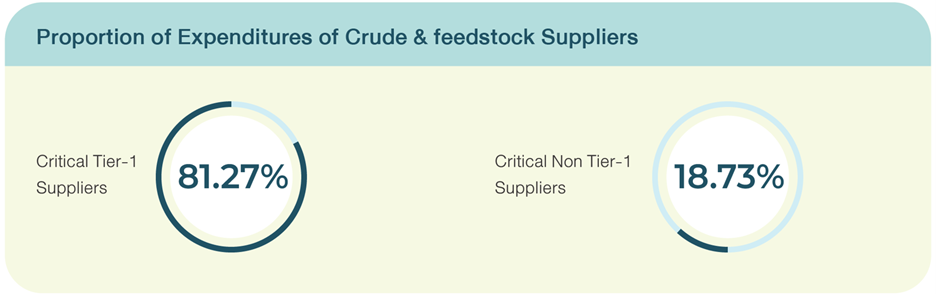
Thaioil Group has implemented the SCOC as a guideline to govern and communicate with the significant crude and feedstock suppliers to respond to and comply with the sustainability practices of the Thaioil Group. In 2024, 100% of significant crude and feedstock suppliers acknowledged and complied with the SCOC. There were no ESG risks that affected the business operation.


Download Documents
Update : February 2024

