Thaioil Group’s procurement prioritizes sustainable supply chain management due to its involvement with a large number of domestic and international suppliers.
This necessitates considering both the opportunities and potential impacts on environmental, social, and governance (ESG) factors, which are crucial for the continuity of business operations.
1.COMMIT
Thaioil Group is committed to implementing sustainable procurement practices aligned with the Thaioil Group sustainability management structure. This structure integrates economic, environmental, social, and governance (ESG) considerations throughout business operations, while adhering to procurement principles of transparency, fairness, and professionalism. Ultimately, these efforts aim to position the procurement process as a strategic driver of Thaioil Group’s success, aligning with international standards for sustainable procurement (ISO 20400 : Sustainable Procurement).
Thai Oil Public Company Limited is the first refinery in Thailand to be certified with sustainable procurement guidelines, namely
ISO 20400: Sustainable Procurement, which covers all non-crude oil procurement products and services
certified by the Management System Certification Institute (Thailand) (MASCI).
2023
2020
2023
Conduct a re-assessment and obtain certification for sustainable
procurement standards ISO 20400
2020
Received certification for sustainable procurement
guidelines ISO 20400 for the first time
Development of Suppliers in Accordance with Thaioil Group's Sustainable Practices (Sustainable Code of Conduct for Suppliers of Thaioil Group: SCOC)
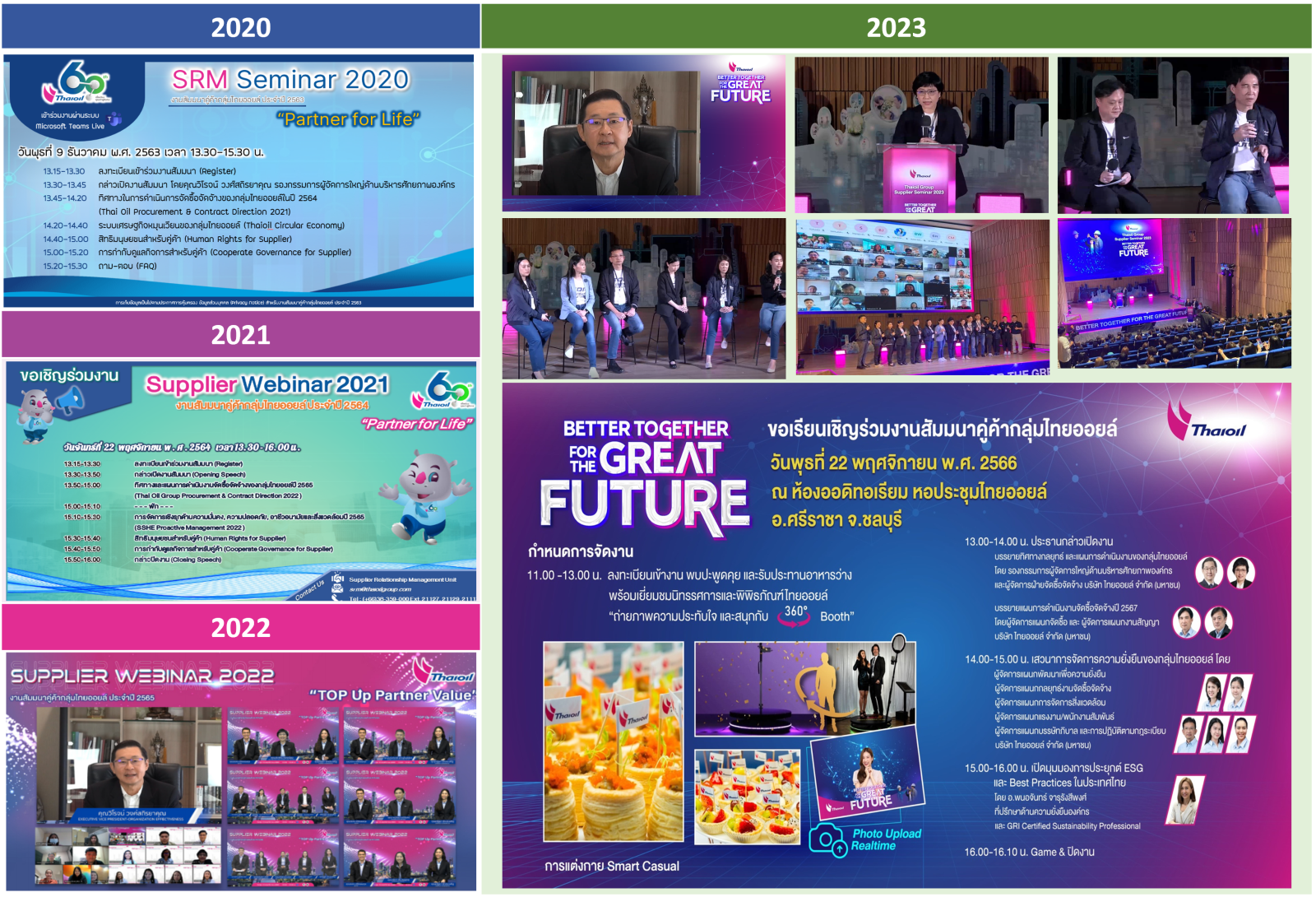
Since 2015, all new suppliers registering through the system are required to accept the SCOC, and their adherence is monitored. To promote continuous improvement, Thaioil Group encourages the adoption of the SCOC by all suppliers, communicating it through the website and annual supplier seminars.
Sustainable Code of Conduct for Suppliers of Thaioil Group : SCOC
Environment
Environmental Management
Sustainable Resource Efficiency
Biodiversity, Deforestation or
Land Conservation
Pollution Prevention and Waste
Management
Greenhouse Gas Reduction and
Climate Change Mitigation
Social
Human Rights
Non-Discrimination
Anti-Harassment
Child Labor
Forced Labor
Freedom of Association
Working Conditions
Wages and Benefits
Employment Creation and Skill
Development
Occupational Health and Safety
Safety and Working Environment
Emergency Prevention, Preparedness, and Response
Community Involvement and
Development
Governance
Regulatory Compliance
Anti-Corruption & Bribery
Anti-Competitiveness
Gifts
Conflicts of Interest
Confidentiality of Information
Disclosure
Respect for Intellectual Property Rights
Customer Issues
Customer Data Protection and Privacy
Protecting Customers' Health and Safety
Education and Awareness
Customer Service, Support and Complaint
and Dispute Resolution
กลุ่มไทยออยล์คาดหวังให้คู่ค้าทุกราย ดำเนินการตามแนวทางปฏิบัติอย่างยั่งยืนของคู่ค้ากลุ่มไทยออยล์ (Sustainable Code of Conduct
for Suppliers of Thaioil Group: SCOC) เพื่อให้แน่ใจว่าคู่ค้าเข้าใจในแนวทาง SCOC ทางกลุ่มไทยออยล์จึงได้มีการสื่อสาร แนวทาง
ดังกล่าว ผ่านทาง website และงานสัมนาประจำปี
2.ASSESS
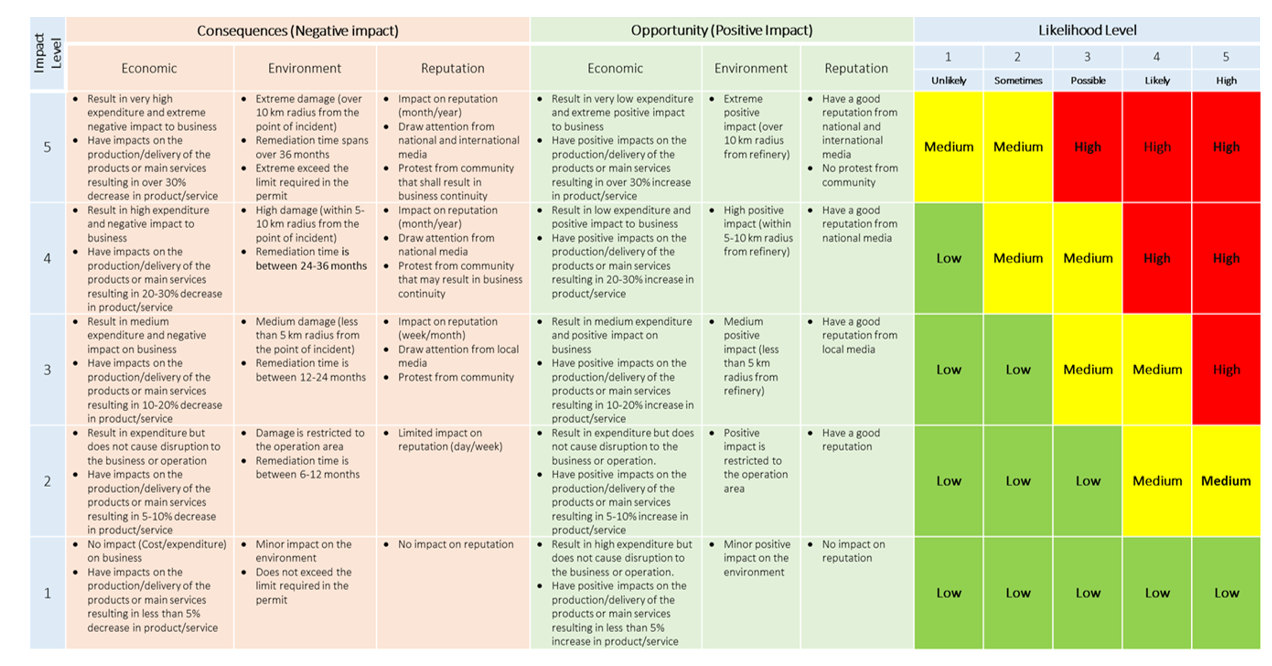
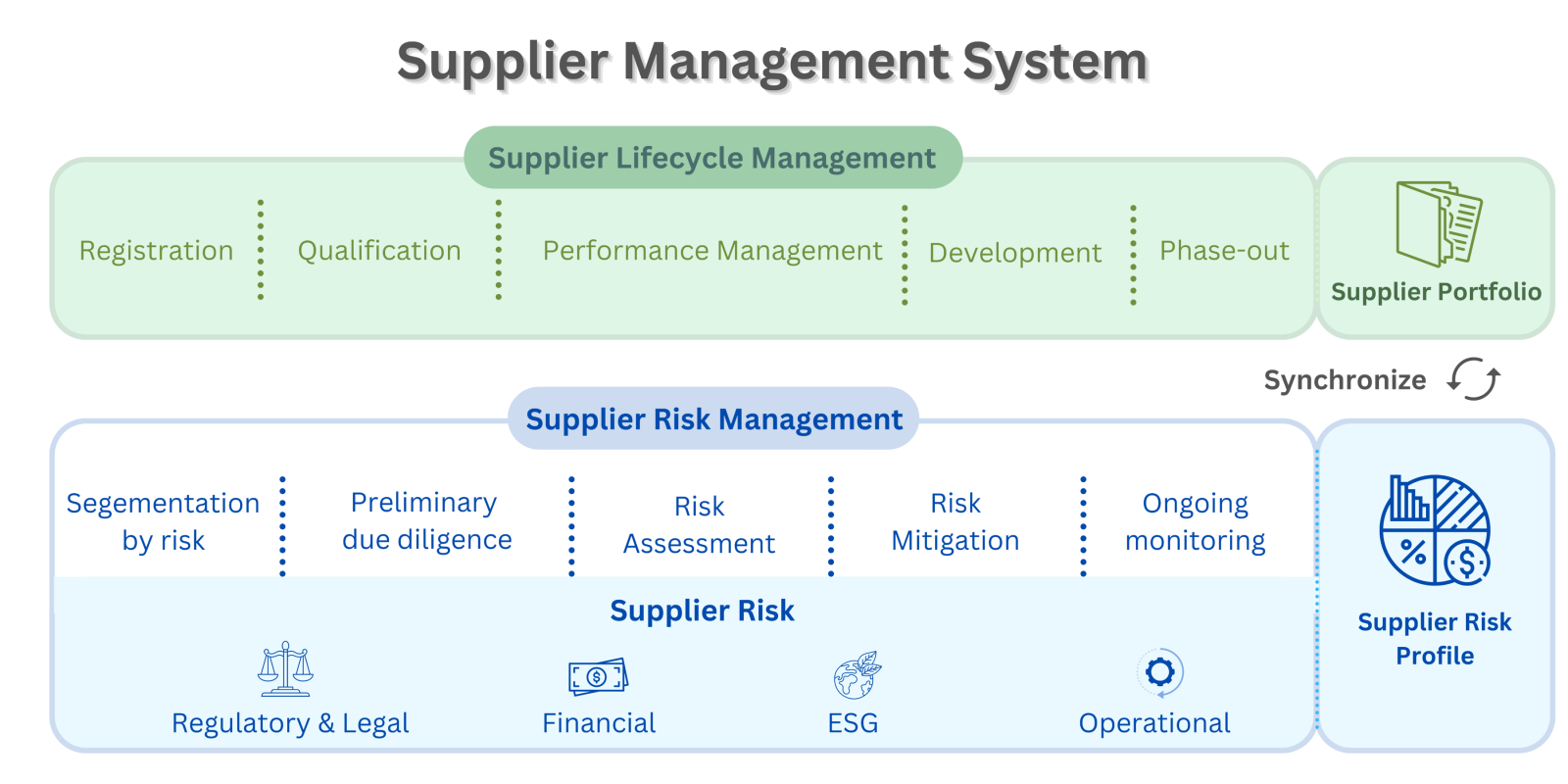
Thaioil Group has a risk assessment process in the supply chain covering all suppliers every year. This process is crucial for classifying supplier groups.
Since 2020, Thaioil Group has assessed supplier risks relating to the ESG issues listed in the SCOC for 100% of newly registered suppliers and completed the triennial risk assessment for 100% of suppliers. The risk assessments are conducted by the responsible department, utilizing methods tailored to each supplier’s product and service categories. Additionally, Thaioil manages supplier risks through an annual selection and assessment process encompassing supplier screening, risk assessment, and improvement initiatives.
Risk assessments are conducted according to the product groups and services of each supplier, covering seven main topics in the sustainable procurement standards outlined in ISO 20400.
7 main topics in sustainable procurement standards ISO20400
Supplier social practices
Fair Operating Practices
Fair Operating Practices
Promoting sustainability in
the value chain
Respect for property rights
Supplier Screening
FY 2023 (numerical)
1.1 Total number of Tier-1 suppliers
1,015
1.2 Total number of significant suppliers in Tier-1
37
1.3 % number of total spend on significant suppliers in Tier-1
11%
1.4 Total number of significant suppliers in non Tier-1
–
1.5 Total number of significant suppliers (Tier-1 and non Tier-1)
37
3.DEFINE
Thaioil Group has a process for classifying suppliers and conducting regular reviews. It has defined Tier-1 Supplier Classification into three groups as follows:
1. Strategic Suppliers (Critical Suppliers):
Suppliers and contractors of significant importance to Thaioil Group’s business.
2. Key Suppliers:
Main suppliers and contractors that distribute products and services directly for Thaioil.
3. Managed Suppliers:
General suppliers and contractors who supply products and services to Thaioil Group businesses.
Additionally, we identify Critical Non-Tier 1 Suppliers as those who do not directly produce and distribute goods and services to Thaioil Group but deal with products and services that are important to Thaioil’s suppliers.
Supply Positioning Model
Thaioil Group utilizes a Supply Positioning Model to categorize purchased products and services based on spending volume, risk factors, and potential opportunities. This model assesses the potential impact of supplier issues on Thaioil's operations. By analyzing this data, Thaioil Group can prioritize suppliers for strategic management and development initiatives. The model categorizes suppliers into four groups:
1. Critical; High Expenditure – High Supply Risks & ESG Risks 2. Bottleneck; Low Expenditure – High Supply Risks & ESG Risks 3. Leverage; High Expenditure – Low Supply Risks & ESG Risks 4. Routine; Low Value – Low Supply Risks & ESG Risks
Supply Classification
The total number of suppliers (1,015) refers to active suppliers, which are those with whom Thaioil Group had spending in the last year (2023). Thaioil now classifies suppliers into three groups as follows:
Strategic Supplier
Suppliers and contractors that are significant to Thaioil Group’s business, using the following criteria:
High Spending
Continuous Spending
High Supply and ESG risks
Key Supplier
Suppliers and contractors that distribute products and services directly for Thaioil, using the following criteria:
High Spending
Moderate Supply and ESG risks
Managed Supplier
Suppliers and contractors, using the following criteria:
Low Spending
Continuous Spending
Moderate to Low Supply and ESG risks
Additionally, we identify Critical Non-Tier 1 Suppliers as those who do not directly produce and distribute goods and services to Thaioil Group but deal with products and services that are important to Thaioil's suppliers.
สรุปขั้นตอนการกำหนดคู่ค้า
4.IMPLEMENT
Thaioil Group has fully integrated sustainability into the existing procurement process (e.g., policy, strategic direction, work processes, risk management, including opportunities) for sustainable environmental, social, and economic development.
To ensure successful implementation with a systematic management approach in accordance with international best practices, we have applied ISO 20400 (Sustainable Procurement) to the entire procurement process (non-crude) since 2020. We plan to be reassessed by a third-party certified body authorized to award formal accreditation to this standard every three years.
Sustainable procurement represents an opportunity to provide more value to Thaioil Group by improving productivity, assessing value and performance, enabling communication between buyers, suppliers, and all stakeholders, and encouraging innovation. Therefore, each year we perform risk assessments based on product/service categories and our supply base to ensure that current implementations remain efficient and effective. Risk management through Strategic Sourcing, the Supplier Relationship Management (SRM) program, and the Supplier ESG program is regularly monitored.
Organizing the procurement function towards sustainability
Organizing the procurement function towards sustainability
Organizational culture
Procedures and systems
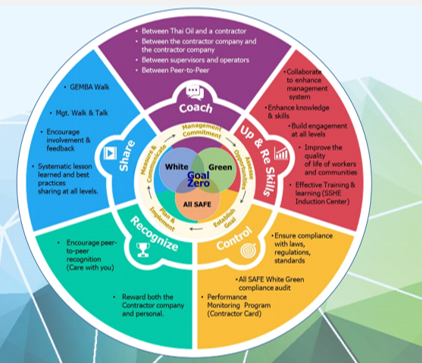
Effective delivery of the sustainable procurement policy and strategy requires that individuals involved in procurement, including internal stakeholders and business partners (e.g., SSHE, contract holders, PTT Group, or others engaged with suppliers in any capacity), understand the reasons for implementing sustainable procurement. Therefore, Thaioil Group closely communicates and collaborates with all internal stakeholders to ensure they understand how to play their part in this implementation and are provided with the means to do so. Those individuals tasked with delivering sustainable procurement should be empowered through a supportive organizational culture, performance management, education, training, and support.
Developing Sustainable Procurement
Practices in alignment with ISO20400
ISO 20400 Workshop for procurement
& contract and internal stakeholders
ESG Auditor Workshop for PTT Group Procurement
We have a set of procedures and tools, including policies, strategies, roadmaps, procedures, templates, and more, that are aligned with Thaioil Group’s sustainability and procurement objectives. In addition, Thaioil Group uses systems (e.g., SAP Ariba, TOPTEN, Contractor Management System, SRM Platform, etc.) to support our workflows and procedures.
Supplier Database Management Work Instruction
Sustainable Procurement Work Intruction
SRM Platform
Supplier Capacity Building
Safe White Green Program:ตั้งแต่ปี 2564 โปรแกรม “Safe White Green” เป็นความคาดหวังขั้นพื้นฐานของกลุ่มไทยออยล์ต่อบริษัท คู่ค้า ที่จะต้องจัดให้มีนโยบายด้าน Security, Safety, Occupational Health and Environment (SSHE). โดยผ่านกระบวนการ 5 ขั้นตอน ดังนี้
Verify current accreditations held for supplier’s management systems (e.g., ISO9001, ISO14001, ISO18001) by SCOC by Thaioil group.
Verify supplier’s QSHE policy and procedures by Thaioil group.
Sourcing Process
Integrate ESG requirements into specifications/ITB.
Past Supplier ESG performance is one of standard criteria for supplier selection. Supplier who receive better past ESG performance is recognized and will have higher score during evaluation (1)
Contract and Performance
Management
Integrate Thaioil Group ESG requirements into contract clauses to ensure that supplier fully comply.
Continuously review ESG performance. If suppliers cannot achieve minimum ESG requirements and not remedy within a specific timeframe, those suppliers will suspend or terminate.
Supplier Development
If supplier ESG performance is not achieved, supplier shall develop or improve ESG performance within a specific timeframe.
All performance results are recorded in the system for supplier selection in the future sourcing.
Supplier
Phase-Out
In case suppliers cannot achieve minimum ESG requirements within a specific timeframe, those suppliers will be in the list of suspension or blacklist.
Remark: (1) This acitivty will be fully implement in 2023
Thaioil continues to monitor supplier compliance with the Sustainable Code of Conduct for Suppliers of Thaioil Group (SCOC) by verifying evidence and certificates such as ISO 14001, ISO 18001, ISO 26000, ISO 50001, ISO 20400, ISO 27001, Green Industry Award of the Department of Industrial Works, the CAC Project, and others.
Furthermore, when suppliers work on-site at Thaioil, we conduct regular SSHE (Safety, Security, Health, and Environment) audits and performance assessments throughout the contract period to ensure compliance with the SCOC. After contract completion, contract holders evaluate the supplier’s performance, with SSHE, ESG (Environmental, Social, and Governance), and SCOC compliance being key aspects of this evaluation. All supplier performance evaluation results are recorded in our systems.
After the contract close-out, contract holders will evaluate supplier performance, with SSHE, ESG, and SCOC compliance included in the performance metrics. All results of the supplier performance evaluation are recorded in the systems.
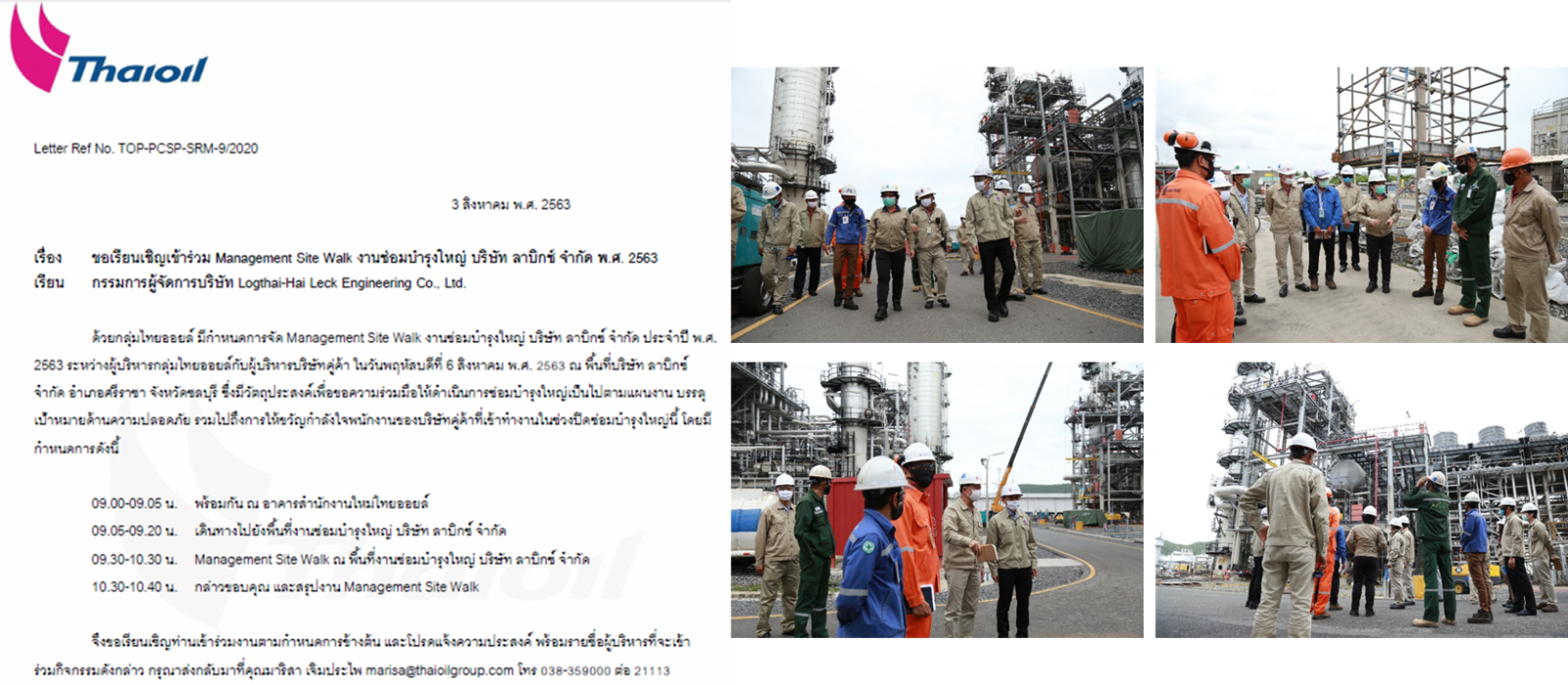
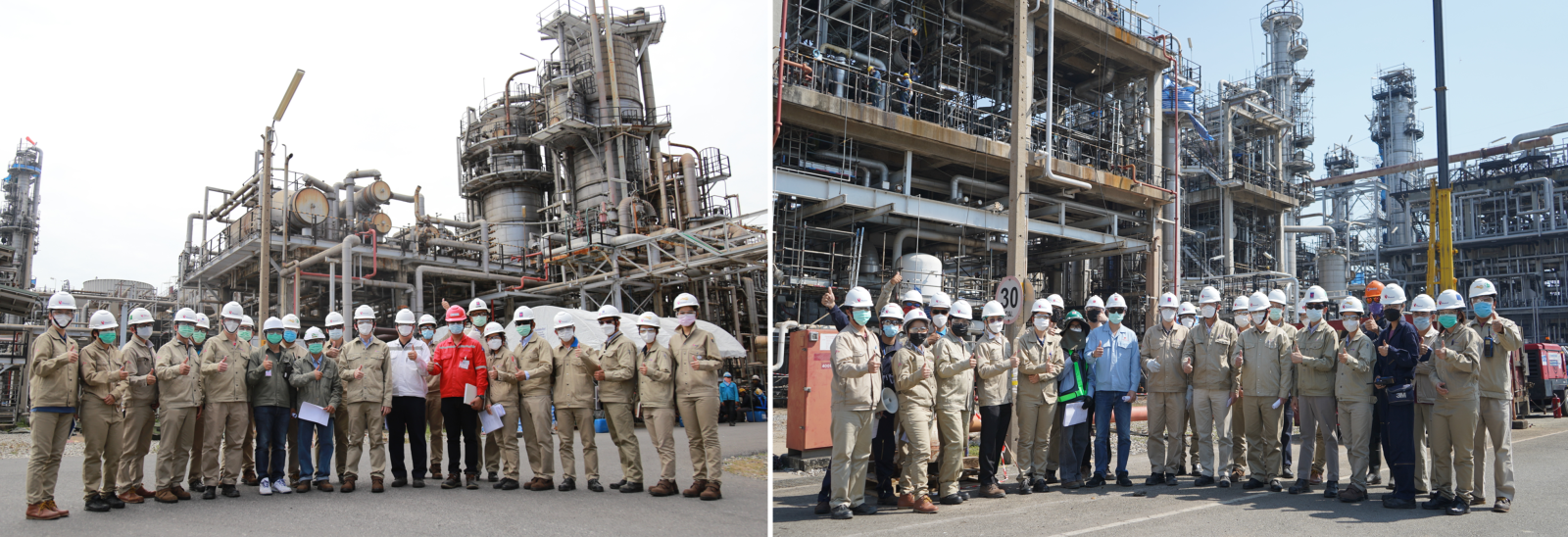
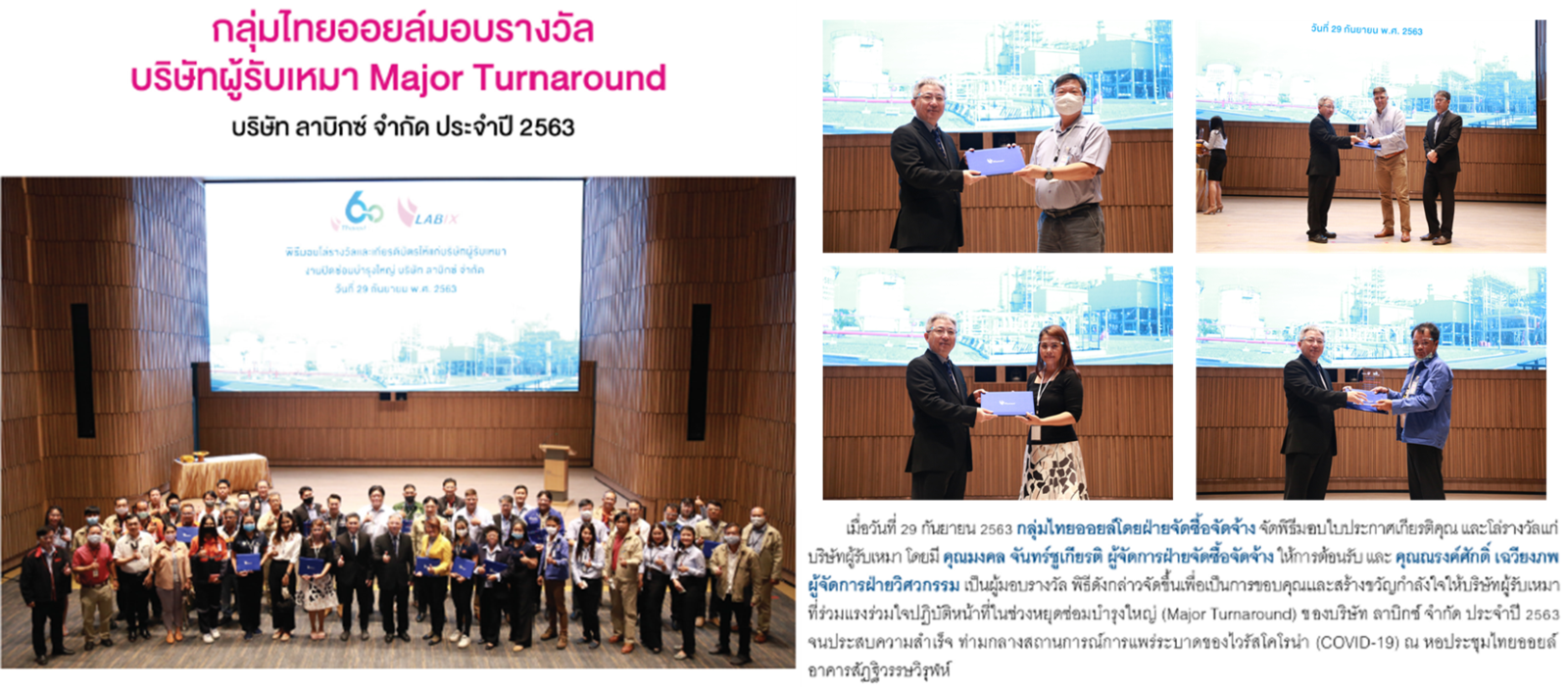
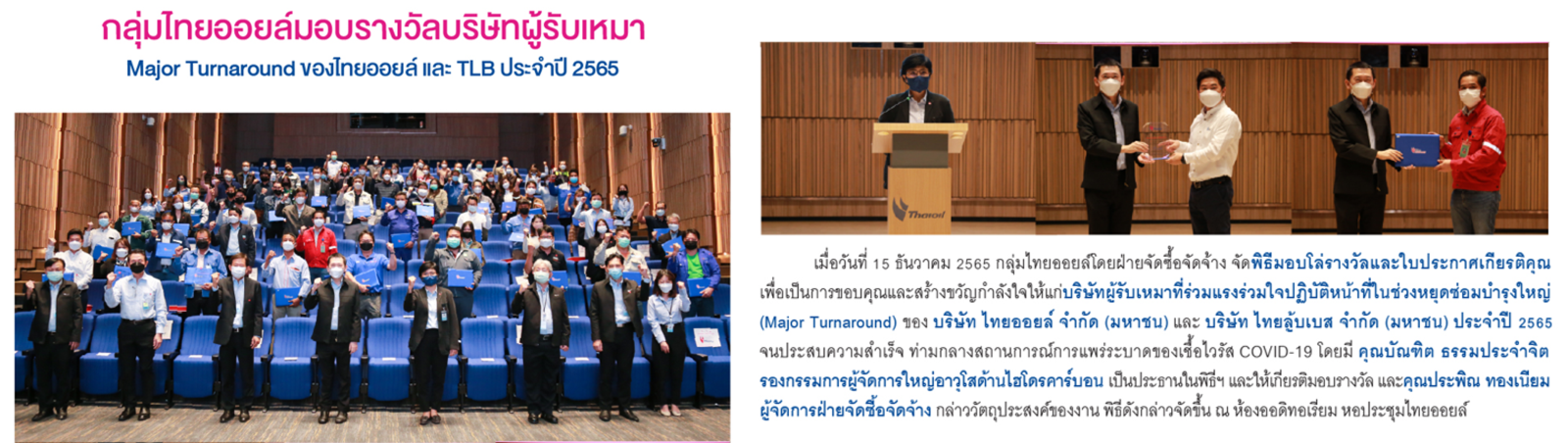
ยิ่งไปกว่านั้นสำหรับงาน Major Turn Around (MTA) จะมีผู้บริหารระดับสูงของกลุ่มไทยออยล์ร่วมตรวจสอบภาคสนามกับคู่ค้า เพื่อให้
แน่ใจคู่ค้าที่มีนัยสำคัญได้ปฏิบัติงานอย่างมีประสิทธิภาพและสอดคล้องกับ แนวทางปฏิบัติอย่างยั่งยืนของคู่ค้ากลุ่มไทยออยล์ (SCOC)
Thaioil Group Site
Thaioil Group Site
แนวทางการประเมิน ESG แบบ Desk Assessment
Number of significant supliers assessed via desk assessments/on-site assessments
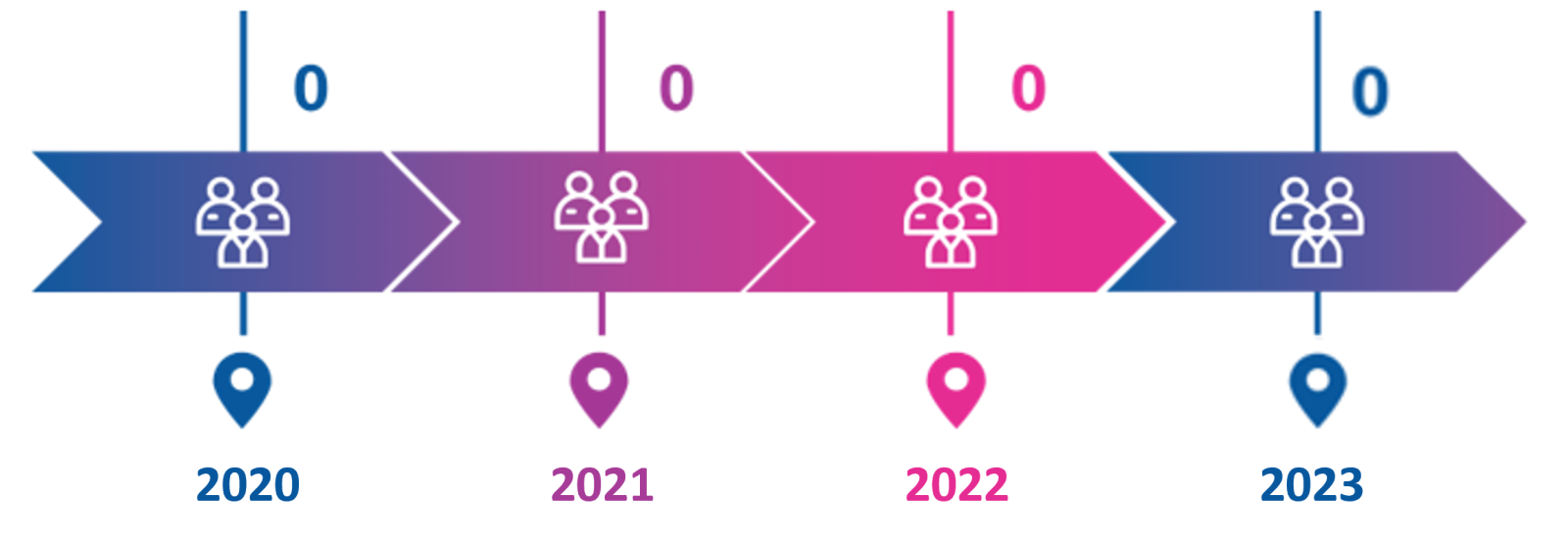
Number of significant suppliers assessed and found potential negative impacts
Number of suppliers with potential negative impacts that were suspended
% of significant suppliers assessed
% of significant suppliers supported in CA implementation
Number of suppliers with potential negative impacts that were terminated
Suppliers Corrective Action Progress Number of significant supliers supported in CA implementation
Number of significant suppliers in capacity building programs
% of significant suppliers supported in CA implementation
% of significant suppliers in suppliers in capacity building programs
6.COMMUNICATE
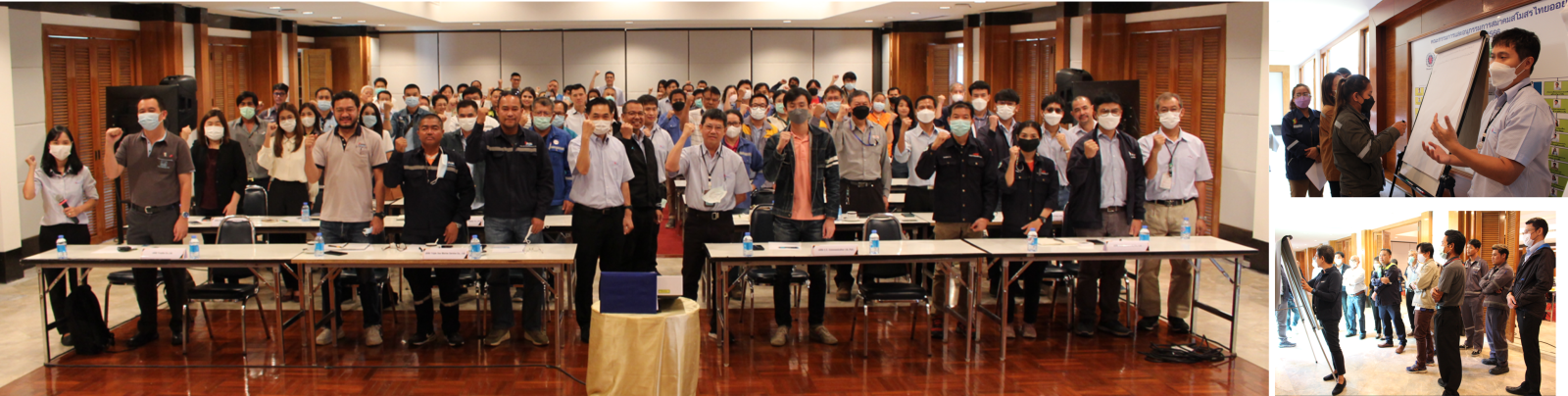
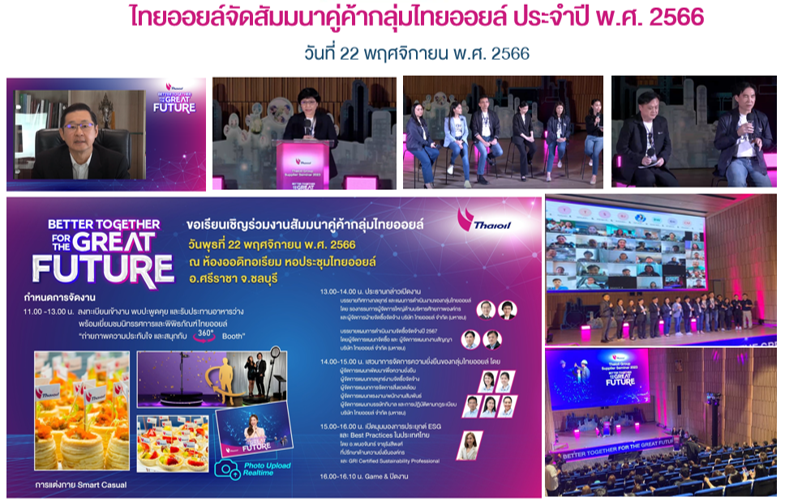
Communication with suppliers and contractors includes various topics such as procurement policy, strategy, direction, principles, CSR in the supply chain, and COVID-19 measures. All related information continues to be communicated through the website and supplier activities, such as the annual supplier conference, supplier meetings, and supplier news via email.
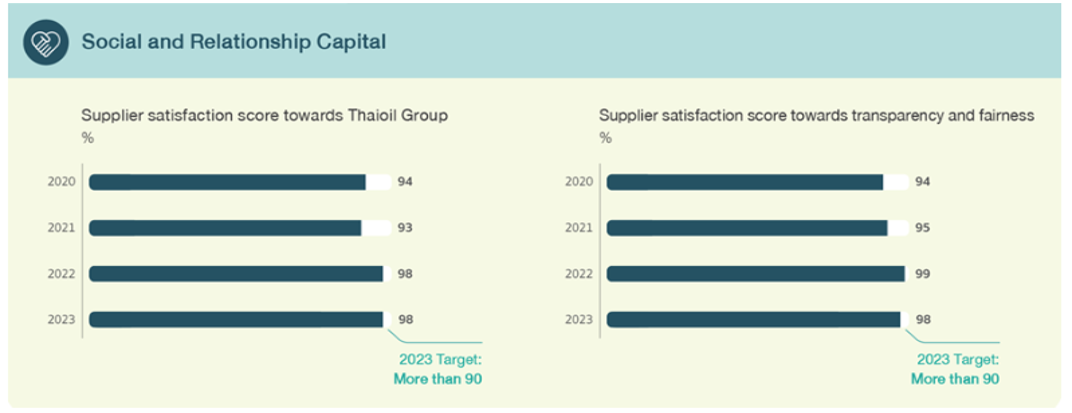
In 2023, we continued to communicate and closely connect with our suppliers and contractors, which reflected in supplier performance regarding work quality, occupational health and safety, and the timeliness of product and service delivery.
Communicate the business plan to manage supplier relationships continuously.
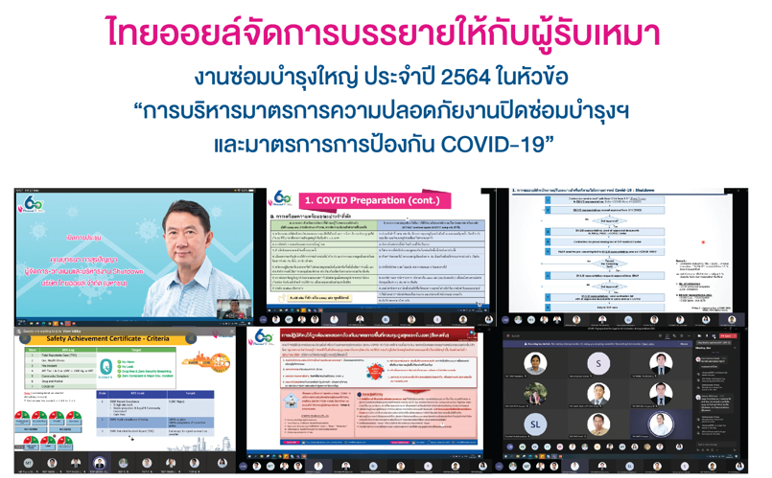
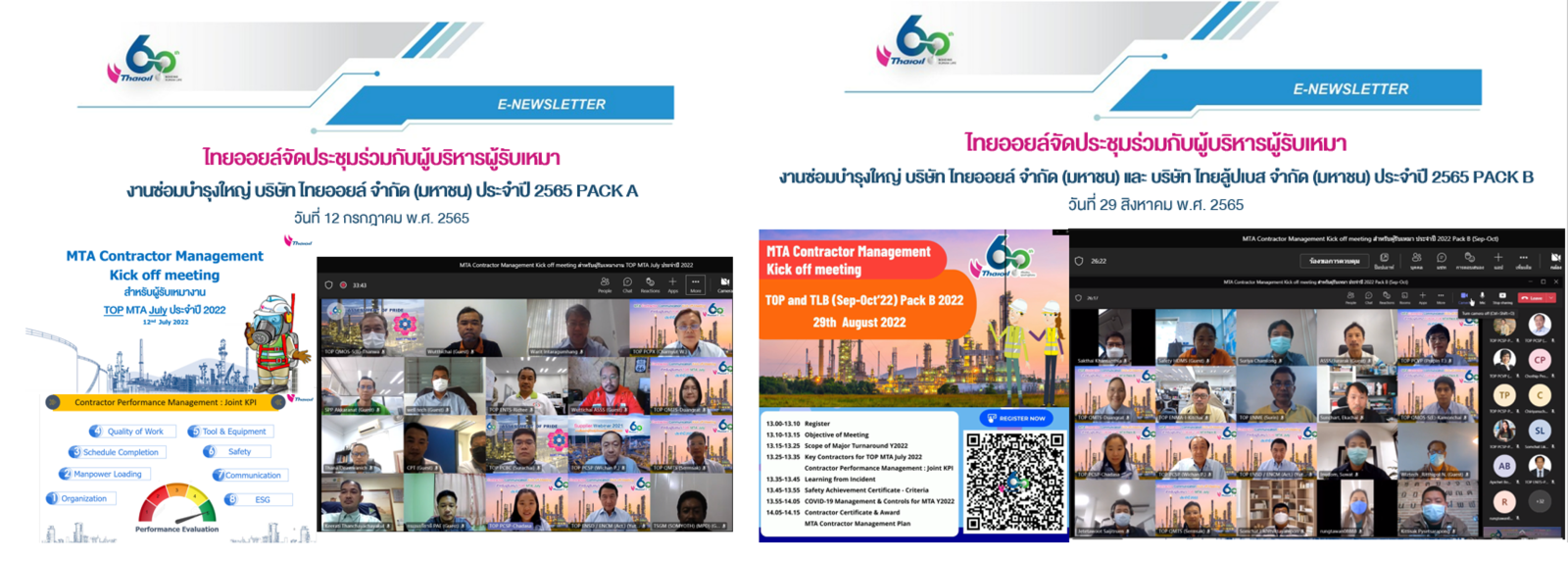
Contractor Management : KOM with Contractor Management 2021
Contractor Management : KOM with Contractor Management 2022
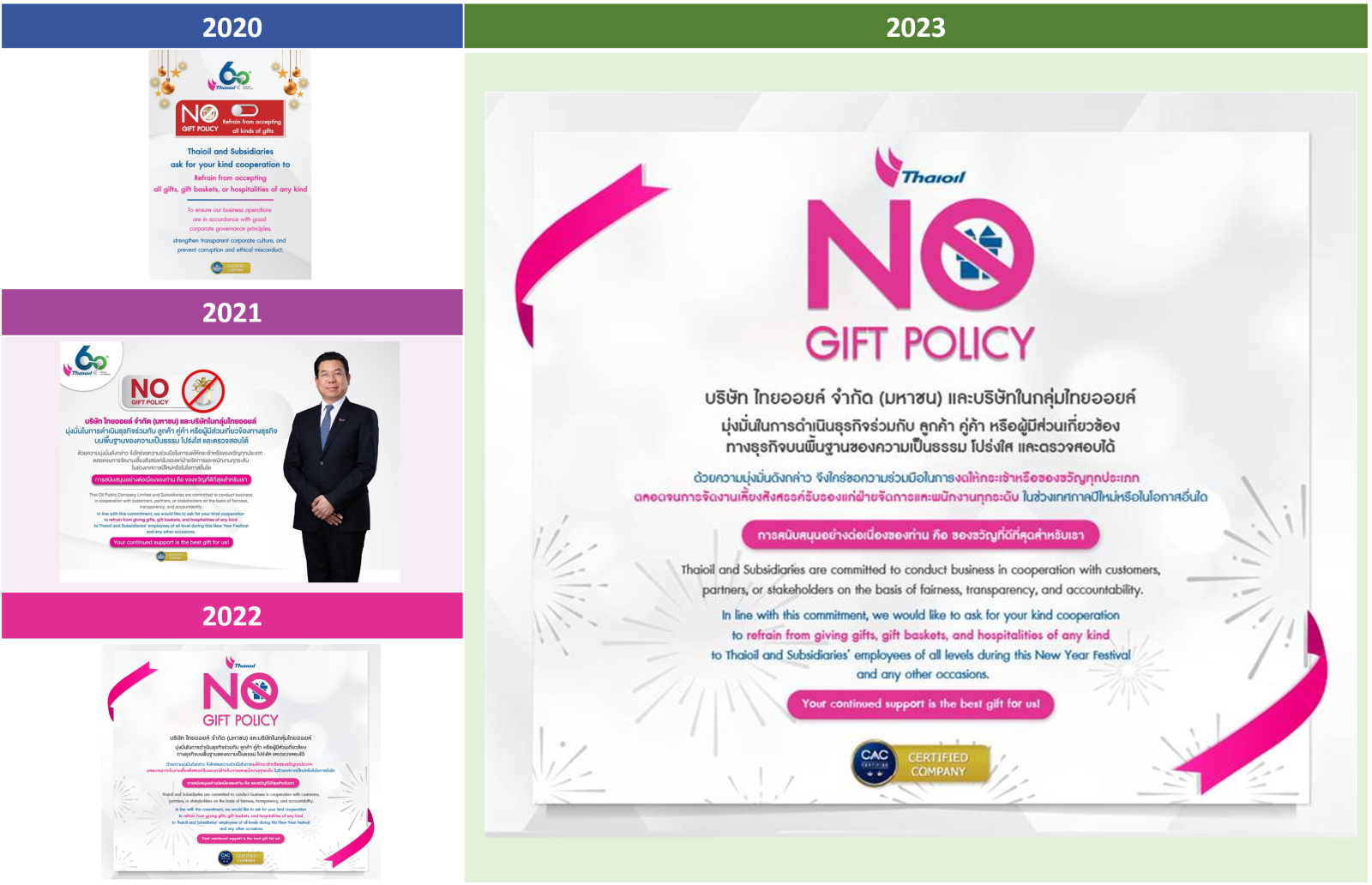
การสื่อสารผ่านกิจกรรมสานสัมพันธ์ เพื่อให้คู่ค้าได้รับทราบ เข้าใจ และปฏิบัติตามเจตนารมณ์ด้านความโปร่งใสในงานจัดซื้อจัดจ้าง
กลุ่มไทยออยล์ อาทิ นโยบายงดรับของขวัญและของกำนัล (No Gift Policy)
Spending Analysis
Spend analysis is one of the key tools that Thaioil Group use to proactively identify savings opportunities, manage risks and optimize the organization’s buying power. It is often regarded as the fundamental foundation of sourcing. Data from spend analysis can improve visibility into corporate spend, as well as drive performance improvement, contract compliance, and most importantly, cost savings.
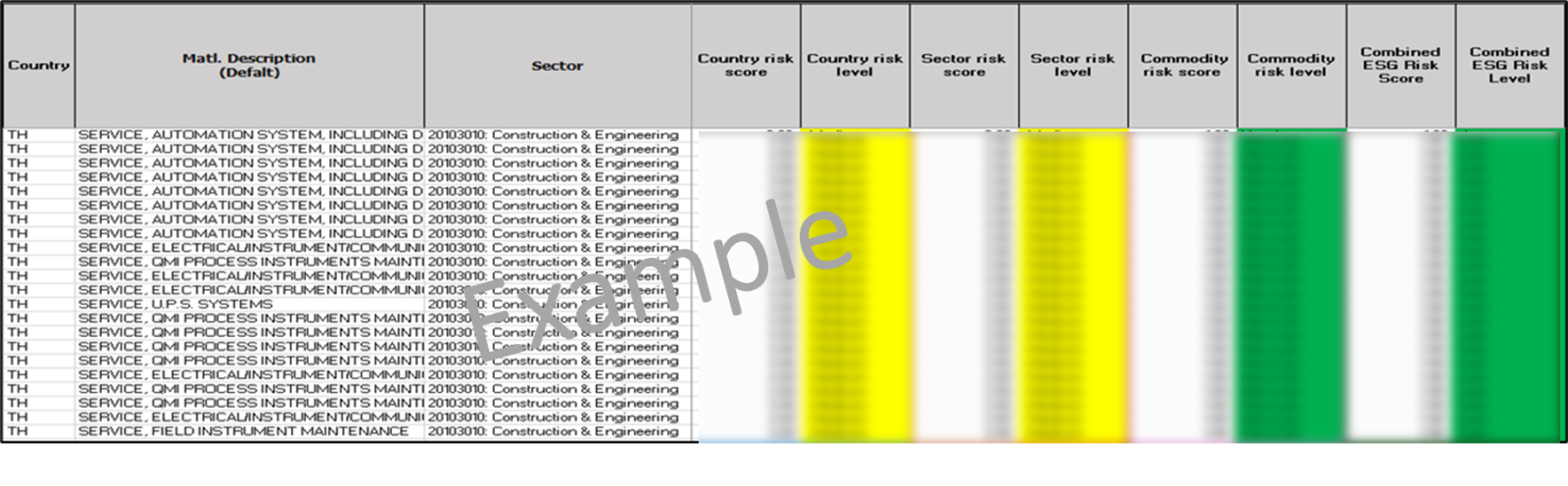
Thaioil Group has analyzed by grouping all suppliers based on Country, Sector and Commodity and use spend as part of supplier screening for significant (strategic/critical) suppliers.