Circular Economy
Challenges, Risks,
and Impacts
Furthermore, the growing volume of waste from the Clean Fuel Project (CFP), especially in the commissioning and start-up process, is anticipated to have an impact on the Company. With these significant challenges, Thaioil Group has managed and optimized its resources consumption to create sustainable and stable business growth. At the same time, the Company seeks opportunities to apply the Circular Economy (CE) principles. This aims to create the value from waste or discarded materials through research, development, and cooperation with the peers and society.


Thaioil Group strives to enhance environmental management to optimize the efficiency of resource consumption. The Company has established the Circular Economy Working Team
Targets

Water consumption reduction
Target 2024
103
Million cubic meters per hour

Waste disposed to landfill
Target 2024
0
Percent
Long-term Target 2030
0
Percent

Waste disposed through 3Rs
Target 2024
100
Percent
Long-term Target 2030
100
Percent

Procurement proportion of environmental friendly materials, equipment, and office supplies.
Target 2024
97
Precent of total spending on the office supplies category
Long-term Target 2030
98
Precent of total spending on the office supplies category

Energy Efficiency Level of Thai Oil Public Company Limited(1)
Target 2024
2nd
Quartile
Long-term Target 2030
1st
Quartile Since 2028
Remark: (1) Benchmarked the energy intensity index among other refinery businesses in the Asia-Pacific region, as ranked in the Solomon Benchmarking Report.
Management Approach
and Performance
Thaioil Group determines its circular economy strategy as “Thaioil CE WE GO” and established a working team to drive the plan and implementation towards the set targets.
Thaioil CE WE GO
Thaioil Group’s Circular Economy strategy

Water and Wastewater Management

Energy Conservation

Green Label Focus

Opportunities for Upcycling
Water and
Wastewater Management
To focus on efficiency of water consumption both inside and outside the refinery
To study the feasibility of water discharge and seawater utilization.

Raw Water Management
Integrated water management is one of the circular economy framework components. The 3Rs (Reduce, Reuse Recycle) have been integrated across all dimensions of Thaioil Group’s water consumption. The Company has established the Water Procurement Working Team for the long-term production process. Their responsibilities include monitoring, assessing the situation, developing strategies, and planning for securing sufficient and sustainable water sources for current production processes and future expansion projects. The goal is to enhance efficiency in water usage throughout the production chain and to reduce the risk of natural water scarcity situations that may arise in the future.
Water Efficiency Management Programs
Water use assessment to identify opportunities for water efficiency improvement
Thaioil Group assigned the long-term water supply management workforce to manage and identify opportunities to improve water efficiency according to the 3Rs principles, such as Reuse backwash water at filtration package, which can significantly reduce raw water use. In addition, Thaioil Group also continuously monitors and reviews process to implement effective water measures to achieve and improve efficiency through systematic water management.


Application of water recycling
Thaioil is currently studying the feasibility of enhancing and implementing water recycling to promote its potential in processes and operations. Relevant projects include:
1. TOP SPP water recovery
Description: Water recovery from the blow down pond, which is the source of water from the boiler blowdown, backwash, condensate from steam leak, is brought back into the clarifier tank where it is filtered before being sent as filtered water to be used primarily in the cooling tower system.
Expected outcome: saving raw water from external source (6-9 tons per hour)
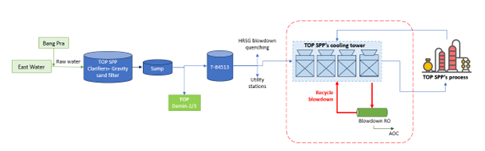
2. The Blowdown Reverse Osmosis (RO) Project
Description: Cooling tower blow down is recycled and reused as make up water by Reverse Osmosis (RO). Water from RO will be sent back to fill the cooling tower again.
Expected outcome: saving water make up (10-15 tons per hour)

3. The development of a 'Water Dashboard’
Description: implement and continue to monitor water situation via Water Dashboard.
Expected outcome: closely monitor water quantity of Chonburi and Rayong area.
Water Risk Management Programs
Thaioil has a systematic management approach regarding the assessment of future water quantities, future water quality-related risks, and potential regulatory changes at the local level, as outlined below:
Assessment of future water quantities available
Thaioil estimates changes by using WRI Aqueduct Atlas and forecast water demand in Thaioil’s operation site at Chonburi provinces where the result shows medium-high risk level. Thaioil has managed the water risk. The water risk management focus on how to deal with drought and water shortage in Rayong and Chonburi provinces where operations locate as well as Business Continuity Plan in case of water shortage. Through our participation with the East Water War Room, we regularly monitor local water demand and supply.
Assessment of future water quality-related risks
Thaioil has regularly monitored the water quality and managed future water quality-related risks by applying Raw Water Quality Standard that identifies the standard level of each substance contaminating in water sold by Thaioil’s suppliers. The risk assessment focus on how to deal with future change in water quality as well as Business Continuity Plan in case of water quality changed.
Assessment of future potential regulatory changes at a local level
Scope of Risks Assessment
Our scope of water risk assessment covers own operation and supply chain activity and product use phase.
Water risk assessment - Product use phase
Thaioil adopts WWF Water Filter Tool in determining the scope of water risk assessment to evaluate water risks in product use phase by assessing water risk at customers’ site operations when they utilize Thaioil’s products. The tool provides “Operation Risk Questionnaire” that covers aspects of physical, regulatory and reputational risks. Yet the assessment questionnaire applies to many industries including Oil, Gas & Consumable Fuels industry, Water Risk Filter Tool contains default industry-specific weightings. For Oil, Gas & Consumable Fuels industry, the default weightings are: Physical Risk: 65%, Regulatory Risk: 5% and Reputation Risk: 30%. The details of water risk assessment are as follows:
Physical risk assessment
Physical risk assessment outlines the assessment on how the customer’s site operations utilize water, including potential contaminants contained in water discharge, the need to treat and purify the water on-site before and after using it in operations, and the possible effects of the site’s operations on the water quality downstream, considering physical, chemical, and biological factors.
Regulatory risk assessment
Regulatory risk assessment outlines the assessment on how the site always in compliance with legal wastewater quality standards, other penalties subjected for water-related regulatory violations in the past year and how strictly of their practices in relevance to water-related regulations and legal enforcement.
Reputational risk
Reputational risk outlines the assessment on how the customers’ site operations conducting business in a sustainable manner or responsibly with respect to water. It comprises four risk categories: cultural importance of water to local communities, freshwater biodiversity importance, media scrutiny/coverage of water-related issues, and risk of hydro-political conflicts in the river basins.
Wastewater Management
Thaioil Group controls the quality of discharged water to the level required by regulatory requirements prior to releasing treated water from the operational areas. This resulted in a wastewater discharge volume reduction. Furthermore, Thaioil Group has designed the wastewater management system to efficiently optimize resource and energy consumption. The wastewater has been categorized into three types with different levels of contamination, as follows:

Type 1
Effluents from the operation process.

Type 2
Continuously Oil-contaminated Water (COC)
water used for washing or rainwater runoff at production sites.

Type 3
Accidentally Oil-contaminated Water (AOC)
rainwater runoff in Thaioil Group’s operational sites, water used for washing for areas without oil contamination, water used for fire drills, and water from cooling towers, or steam generators.
Type 1
Effluents from the operation process
Type 2
Continuously Oil-Contaminated Water (COC)
water used for washing or rainwater runoff at production sites.
Type 3
Accidentally Oil-Contaminated Water (AOC)
rainwater runoff in Thaioil Group’s operational areas, water used for washing for areas without oil contamination, water used for fire drills, and water from cooling towers, or steam generators.
Each type of wastewater is treated by Thaioil Group’s wastewater treatment system, which operates 24 hours a day with constant monitoring of treated water quality. Also, the system directly reports the value of Chemical Oxygen Demand online (COD Online) to the Department of Industrial Works in a real time manner. The quality of wastewater is tested by Thaioil Group’s laboratories and verified by external independent third parties to ensure that the quality of treated water is higher than the quality level required by the standards. In addition, the Company also emphasizes on human capital development through several activities, such as training operators overseeing wastewater treatment systems to increase the capability in wastewater management efficiency. In 2024, Thaioil Group successfully maintained wastewater quality above regulatory requirements.
Highlighted Projects
In 2024, Thaioil Group has implemented several projects in three main areas as follows:
1. 3Rs in Process: Water Management Projects
2. Sustainable water management projects
3. The ‘Water Dashboard’ development project
2024
Performances

Hydrocarbon Spills
Overview of oil spills incident in Chonburi
In 2023, the oil spill incident occurred near the Single Buoy Mooring (SBM-2) of the Thaioil refinery in Sriracha, Chonburi, during the late hours of the night on September 3, 2023, there were approximately 60,000 liters of oil spills, or approximately 377.39 barrels. Oil spills can be contained and resolved rapidly without oil stain shoreline. However, there is no legal proceeding matter and sanction in relation to oil spills in Chonburi. The case is currently under investigation.
Root causes of the spill incident
The incident occurred due to the broken hose in the second section (counting from the SBM-2 buoy towards the ship), causing a crude oil leak. The cause of leakage is under investigation by a government-appointed committee.
Implemented measures
Thaioil has implemented four management measures including (1) Prevention, (2) Mitigation (3) Equipment inspection, and (4) Personnel development.

Department of Marine Movement and Logistic
Department of Marine Movement and Logistic implemented the prevention measures which are as follows:
- The design and construction of mooring buoys, as well as floating and subsea piping systems meet international standards.
- Adopt crude oil pumping and receiving protocols that align with international standards.
- Monitor and maintenance of relevant equipment.
Emergency and Crisis Management Team
Emergency and Crisis Management Team, consisting of operational and communication teams, mitigate the impacts of the incidents through measures as detailed below:
- Adopt manual and contingency plans.
- Provide training in Oil Spill International Maritime Organization (IMO) Level 1-3 and ICS 100/200/300 to an operation team.
- Prepare oil spill equipment to be available on marine vessels and warehouses.
Department of Inspection and Equipment Integrity
Department of Inspection and Equipment Integrity, evaluating the effectiveness of its existing procedures and has taken proactive steps to enhance the quality and integrity of Bouy, piping and hoses. All the quality and assurance process will be started from vendor selection, manufacturing, receiving, interval inspection until the end of service life which all processes are complied with the latest international standards and vendor guidelines, as detailed below.
Department of Marine Movement and Logistic provided various trainings
In 2023, Department of Marine Movement and Logistic provided various trainings including:
- Procedures for bringing ships to and from Conventional Buoy Mooring (CBM) systems.
- Procedures for bringing ships to and from Single Buoy Mooring (SBM) systems.
- Operations for controlling and transferring crude oil or oil products (Cargo operation – Loading master) on oil tankers.
- Management of emergency situations, such as oil spills or chemical spills
In addition, the Company plan to participate with Oil Industry Environmental Safety Group Association in Sriracha area (IESG-SASC) to conduct the exercise on oil spill cleaning in 2024. This is a joint exercise with Thai Oil Public Company Limited, PTT Public Company Limited, and Esso (Thailand) Public Company Limited, which will be hosted by Thai Oil Public Company Limited. The strengthened process and measures will be applied in this exercise.
Response and remediation
Moreover, the Emergency and Crisis Management Team has managed responsive actions to minimize the impacts of the incidents. Once the incident occurred,
- Thaioil swiftly responded with support from government and private entities to manage and resolve the situation rapidly, safely and effectively. no oil stain shoreline Thaioil conducts engagement with publics including community, investors and shareholders to build trust and compensation to those which are negatively affected by the incident with approximately 47.5 million THB.
- Thaioil continuously monitors ecological impact and biodiversity and has assigned environmental management department to monitor and restore biodiversity at site affected by oil spills.
Energy
Conservation
To use energy resources wisely.
To carry out projects for promoting the sustainable use of renewable energy both inside and outside the organization.

Energy Management
Thaioil Group places great importance on energy management by setting the Energy Intensity Index (EII) as a key performance indicator (Corporate KPI) for the organization. A dedicated working committee on energy management and oil loss reduction is tasked with driving operations in this area. In 2024, Thaioil Group consumed approximately 50.09 gigajoules of energy, an increase of 0.66% compared to the previous year due to a significant rise in the demand for fuel oil and products for consumption. However, Thaioil Group remains committed to continuously implementing energy efficiency projects to ensure optimal energy use across various production capacities. In 2024, Thaioil Group completed a total of 39 energy efficiency projects, which resulted in an energy savings of 494,794 gigajoules. This reduction in energy consumption is equivalent to a decrease of 28,985 tons of carbon dioxide per year and translates into cost savings of approximately 223million baht.
Energy audits to identify opportunities for improving energy performance
In recognition of the importance of energy efficiency, Thaioil operates its business by adhering to the internationally recognized standard for energy management systems, ISO 50001:2018. In 2024, This energy management standard covers site operations: Thai Lube Base and Crude Distillation Unit-3 (CDU). Compliance with ISO 50001:2018 allows Thaioil to quantify energy types, energy quantities and identify relevant variables of significant energy use and implement energy management and control systems to improve energy performance.
Thaioil has established the Energy Management & Loss Improvement Committee to oversee energy consumption and comply with the Energy Conservation strategy. This committee is tasked with communicating with employees to raise awareness of energy conservation and control, identify opportunities for improving energy performance, as well as monitoring energy consumption by identifying usage across various operation teams. They also provide energy conservation training to relevant operation teams and regularly report energy management results to executives.
Additionally, a working team from this committee serves as an Internal Energy Audit team to perform energy audits as required by laws and regulations. According to the internal audit result in 2023, it was identified that operation was the main source of energy consumption. Meanwhile, natural gas in furnace/heater/utility was identified as the highest shares (47.5%) of energy consumption by fuel types. Thus, these can be opportunities for Thaioil to improve energy performance by reducing energy consumption in operation and in furnace/heater/utility system.
Highlighted Projects
Energy efficiency projects implemented in 2024 include:
Evaluated production efficiency of the Hydrogen Manufacturing Units 1 and 2
Adjusted control variables and improved efficiency of the incinerators
Increased efficiency of the energy consumption in the production units
Adjusted control variables in the production process
Increased upper limit of the pressure in incinerators
Reduced fuel consumption in the hydrocarbon quality improvement unit or Unionfining Unit
Increased temperature of desorbent
Energy conservation initiatives in the workplace
Energy efficiency improvement projects
1. Evaluated production efficiency of the Hydrogen Manufacturing Units 1 and 2
2. Adjusted control variables and improved efficiency of the incinerators
3. Increased efficiency of the energy consumption in the production units
4. Adjusted control variables in the production process
5. Increased upper limit of the pressure in incinerators
6. Reduced fuel consumption in the hydrocarbon quality improvement unit or Unionfining Unit
7. Increased temperature of desorbent
Energy conservation initiatives in the workplace
1. Energy conservation initiatives in the workplace
Highlighted Projects
Energy efficiency projects implemented in 2024 include:
Thai Oil Refining Public Company Limited
1. The replacement of the catalyst in the hydrocracker unit 1 resulted in a reduction in the amount of fuel used in the furnace, as the temperature of the feed entering the reactor was lowered.
2. The cleaning and maintenance of the distillation column in the crude distillation unit 3 led to a reduction in the amount of steam used in the distillation column.
3. Adjusting control variables in thAdjusting control variables in the heating furnace and improving the efficiency of the furnace at Thai Oil Public Company Limited, such as reducing excess air in the furnace of the diesel hydrodesulfurization unit 2 and cleaning the furnace in the high vacuum distillation unit 2 & DC, resulted in a reduction in the amount of fuel used in the furnace.
Thai Lube Base Public Company Limited (TLB)
1. Maintenance of steam control valves was carried out to improve the accuracy in controlling the steam flow rate during low flow periods. This resulted in a reduction in steam consumption, while still effectively controlling the solvent loss in the extraction process at the Clean Oil Rubber (TDAE) production unit.
2. A plate heat exchanger (Compabloc) was installed at the Propane Deasphalting Unit to transfer heat from the long residue oil to asphalt and propane. This led to a reduction in the use of hot oil in other heat exchangers and reduced fuel consumption in the hot oil furnace.
3. Through strict monitoring and control, it was found that the inlet temperature of the distillation column could be reduced, as the amount of solvent carried with the product was lower than the standard. This allowed for process improvements and a reduction in fuel consumption in the Raffinate Recovery Section of the Aromatic Extraction Unit (MP Refining Unit).
Thai Paraxylene Company Limited (TPX)
1. Energy consumption in the production of paraxylene was reduced by adjusting the parameters of the control system (ACCS), optimizing the water injection rate, and refining the line flush process at the C8+ Aromatic Extraction Unit or Mixed Xylene (Parex Unit).
2. The exclusion of the re-distillation of the Isomar Stripper Bottom in the aromatic and non-aromatic separation unit using a solvent (Extractive Distillation Sulfolane Unit) led to a reduction in energy usage, without affecting the quality of the final product.
LABIX Company Limited (LABIX)
1. The reduction of the benzene outlet temperature used for cleaning the catalyst in the Clean Product Precursor Production Unit (Detal Plus Unit) resulted in a decrease in thermal energy consumption for the benzene circulation, while maintaining the cleaning efficiency of the catalyst.
2. The reduction of fuel consumption in the Kerosene Pre-fractionation Unit was optimized based on the real-time flow rate of the incoming materials and the condition of the distillation column. This helped reduce excess fuel consumption while still maintaining control over the quality of the final product.
TOP SPP Company Limited (TOP SPP)
1. Continuous optimization of the production process (Plant Optimization) to achieve energy conservation goals and reduce costs, such as considering the use of gas turbines with lower fuel consumption rates as a priority. This resulted in an increase in the overall utilization of electricity and steam production (Utilization) at the Power Generation Unit Project 1, as well as a reduction in electricity and steam production operational costs (Cost Saving). Additionally, the reduction of operation of the less efficient condensing steam turbine during periods of low electricity demand (Off-peak) by replacing it with gas turbines with lower fuel consumption led to an overall improvement in electricity and steam production efficiency.
The two most energy-efficient projects in 2024 were the maintenance of steam control valves to improve the accuracy of controlling the steam flow rate during low-flow periods. This resulted in a reduction in steam consumption while still effectively controlling solvent loss in the extraction process at the Clean Oil Rubber (TDAE) production unit. The second project involved the installation of a plate heat exchanger (Compabloc) at the Propane Deasphalting Unit to transfer heat from the long oil residue to asphalt and propane. This led to a reduction in the use of hot oil in other heat exchangers and reduced fuel consumption in the hot oil furnace. Both projects collectively saved up to 202,655 gigajoules of energy, which accounts for 41.0 % of the total energy savings or the equivalent of 11,369 tons of carbon dioxide per year.
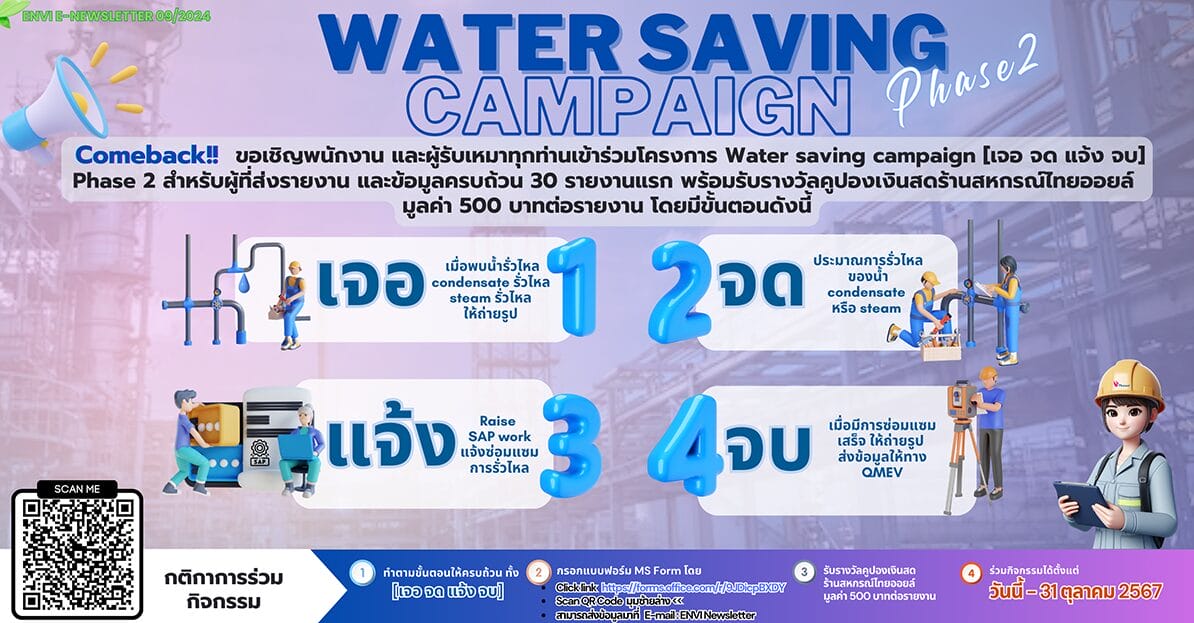
In addition, Thaioil Group has implemented energy conservation projects in the workplace by supporting and promoting employee awareness of the importance of energy conservation through various activities and communication channels. These include competitions encouraging employees to propose creative ideas for improving energy efficiency, publishing articles or news related to energy conservation activities in the company’s monthly *Akani* journal in the Energy and Loss column, posting energy-saving campaigns and energy conservation tips in public areas of the office, and organizing booths to publicize energy conservation results. In 2024, the working committee organized continuous energy conservation campaigns, including the Thaioil Save Energy Challenge, a competition inviting employees and contractors to post videos on their Facebook applications about energy-saving practices at work. The committee also conducted a "Leakage Detection" activity to identify steam, hydrocarbon, or chemical leaks, and wasteful energy use from equipment in the production process. These initiatives aim to engage employees in energy conservation, reduce waste and environmental impact, and enhance workplace safety, while also elevating the organization's efforts and fostering greater awareness among employees about the importance of energy conservation.
The project promoting employee participation in a competition for creative ideas on efficient energy use within the company

An exhibition activity to publicize the energy conservation achievements at the 2024 annual QSHE Day event

Thaioil Save Energy Challenge activity

Energy & Loss Campaign activity, which involves the detection of steam, hydrocarbon, or chemical leaks, as well as the identification of excessive energy consumption from equipment within the production process

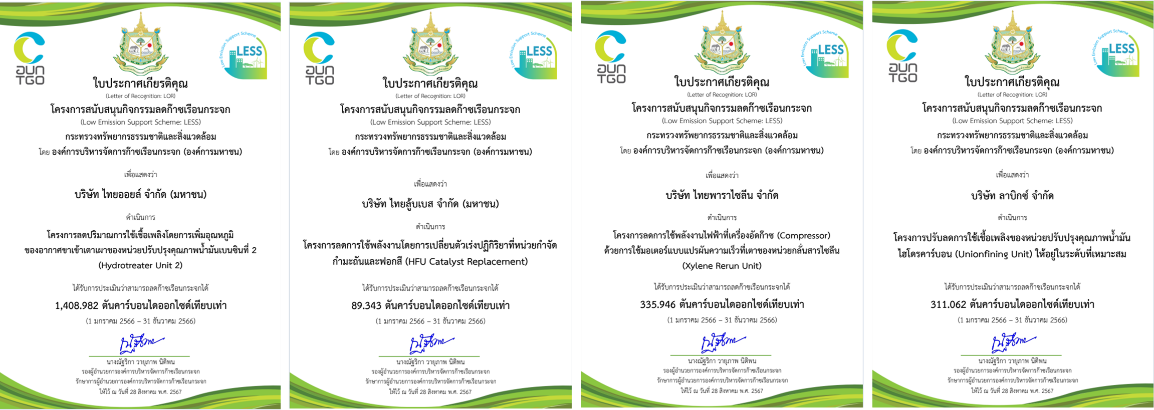
In 2024, Thaioil Group presented four energy efficiency and greenhouse gas reduction projects, implemented in 2023, to participate in the “Low Emission Support Scheme (LESS)” by the Greenhouse Gas Management Organization (Public Organization). The group received a certificate of recognition for reducing a total of 2,145 tons of carbon dioxide equivalent.

2024
Performances
In 2023, Thaioil Group demonstrated an increase in overall production capacity. This was attributed to stabilized crude oil prices while the national energy demands increased in line with the national economic recovery. This positive trend enhanced the Company’s refinery operational efficiency, especially for the TOP SPP expansion project that was commissioned as planned and secured electricity and steam distribution to Thaioil Group
As a result, the energy intensity index of Thai Oil Public Company Limited and Thai Paraxylene Company Limited exceeded the target. On the other hand, LABIX Company Limited continued to increase its energy efficiency through several projects Despite Thai Lube Base Public Company Limited gained benefits from efficient electricity and steam production, the energy intensity index has declined due to production capacity being lower than planned and Thaioil Group’s management or production plan based on the market demands to maximize hydrocarbon values, leading to an increase in the proportion of petroleum production and a decrease in the proportion of lubricants due to stagnant demand for lubricants.
According to the Solomon Benchmarking Report 2022, Thai Oil Public Company Limited had better energy efficiency than in 2020. In comparison with industrial peers in the Asia-Pacific region, the Company’s energy efficiency ranking was classified as the 3rd Quartile, which declined from the 2nd Quartile in 2020. The main reason of this decline was attributed to the reduced number of industrial peers during the benchmarking process due to refinery shutdowns or decisions to forego benchmarking. Despite the overall improvement in energy efficiency, the Company still faced challenges in performance grouping due to a smaller number of industrial peers. Although, the Company showed positive improvement in energy efficiency performance in 2022, the overall energy consumption is expected to reduce while the energy efficiency is expected to improve once all new production units in the Clean Fuel Project (CFP) are commercially operated. This is because the new production unit of the CFP has better energy efficiency than the existing production units. On the other hand, compared to the other companies in the Solomon Benchmarking, Thai Lube Base Public Company Limited and Thai Paraxylene Company Limited maintained energy efficiency in the 1st Third, and 2nd Quartile, respectively.
For LABIX Company Limited, the Company achieved exceptional results in implementing its energy efficiency improvement projects in accordance with its energy efficiency improvement plan. This led to the Company achieving its energy intensity index target and demonstrating sustained improvement each year.

In 2024, Thaioil Group adjusted its operations and production processes to align with the growth of the economy and domestic oil demand, maintaining a consistently high plant utilization rate. In terms of production processes, Thaioil Group achieved an energy efficiency performance index better than the target, due to the ongoing implementation of energy conservation projects aimed at continuously improving energy efficiency.
In 2024, Thai Oil Public Company Limited saw an increase in its Energy Intensity Index (EII) compared to 2023. The primary reason for this was the adjustment of diesel and gasoline production standards from Euro 4 to Euro 5, which involved reducing the sulfur content from no more than 50 milligrams per kilogram to no more than 10 milligrams per kilogram, in accordance with the national agenda for “Dust Pollution Control,” which was mandated to take effect from January 1, 2024. This change required adjustments to the production process under more stringent conditions and increased the capacity of the Hydrogen Manufacturing Unit, resulting in higher overall energy consumption. However, the energy efficiency performance index for 2024 remained better than the target, as continuous energy reduction projects were implemented, and the production units saw improved energy efficiency after maintenance activities.
Thai Lube Base Public Company Limited saw a decrease in its Energy Intensity Index compared to 2023. However, the energy efficiency performance index for 2024 was still in line with the planned target, due to higher production rates and the installation and use of a new plate heat exchanger with improved materials that are more durable for use. This resulted in energy savings as expected.
Thai Paraxylene Company Limited saw a decrease in its Energy Intensity Index compared to 2023. However, the energy efficiency index for 2024 did not meet the planned target. The primary reason for this was that production output in January and July was below the production plans. In order to address this issue, the Company has continuously implemented energy efficiency projects in the production of paraxylene by adjusting control system parameters (ACCS), optimizing water injection rates, and optimizing line flushing at the C8+ Aromatic Extraction or Mixed Xylene (Parex Unit). These initiatives aim to maximize the energy efficiency of the paraxylene production unit.
In 2024, LABIX Company Limited saw an increase in energy consumption per unit of LAB production compared to 2023. This was due to a decrease in LAB production rates, which resulted from a maintenance shutdown of the Crude Distillation Unit 3 and increased energy use caused by reduced catalyst efficiency. However, the energy consumption per unit of LAB production in 2024 still remained better than the planned target. This was attributed to a higher proportion of Normal Paraffin in the feedstock, allowing for more Normal Paraffin production with less raw material, which in turn reduced energy use in the production process. Additionally, the company continued to implement energy-saving projects consistently.
Green Label
Focus
To set target of Green Label Product usage.
To establish green procurement.
To set Green Office / Green Meeting for sustainable management of office and meeting.

Promotion of Green Procurement
In 2024, the promotion of green procurement became an important mechanism in responding to the demands of consumers, industries, and the public and social sectors that are more environmentally conscious. To reduce the impacts of climate change and other environment, Thaioil Group continues to prioritize environmental friendly management, or “Green Label Focus”, which covers production, product utilization, procurement, and environmental friendly services. This is supervised by working teams to ensure that targets are efficiently and sustainably achieved.
Thaioil Group has continuously adhered to sustainable procurement or ISO 20400:2017 since the Company has been certified in 2020. This standard has been applied to all non-crude procurements. Moreover, the Company also promotes sustainable procurement across the supply chain through improving the Company’s Procurement Policy. In addition, Thaioil Group encourages the procurement and service by selecting material, equipment, and service, together with developing green products to reduce upstream waste and to increase efficiency of resource consumption. The Company also communicates with suppliers to build their readiness in the annual Thaioil Group Supplier Seminar.
Highlighted Projects
Thaioil Procurement Team collaborated with the PTT Procurement Team and the Management System Certification Institute of Thailand (MASCI) to advocate the Green Industry Certification Promotion Project since 2023. The objective was to strengthen capacity in collaborative business in the long term. This project involved knowledge-sharing sessions, workshop, and expert recommendation to facilitate the suppliers in obtaining Green Industry certification. However, this project is still implemented in 2024. As a result, a total of 32 suppliers participated in the project, with three suppliers having passes to obtain Green Industry Level 3 and 4 certifications as the target set (3 companies).
The Green Industry Certification Promotion Project
The Green Industry Certification Promotion Project
2024
Performances
The Company prioritized the environmental friendly products (Green Products) in the procurement of materials, equipment, and office supplies. This aims to motivate suppliers to develop their production processes for environmentally friendly products and reduce negative environmental impacts throughout the supply chain.
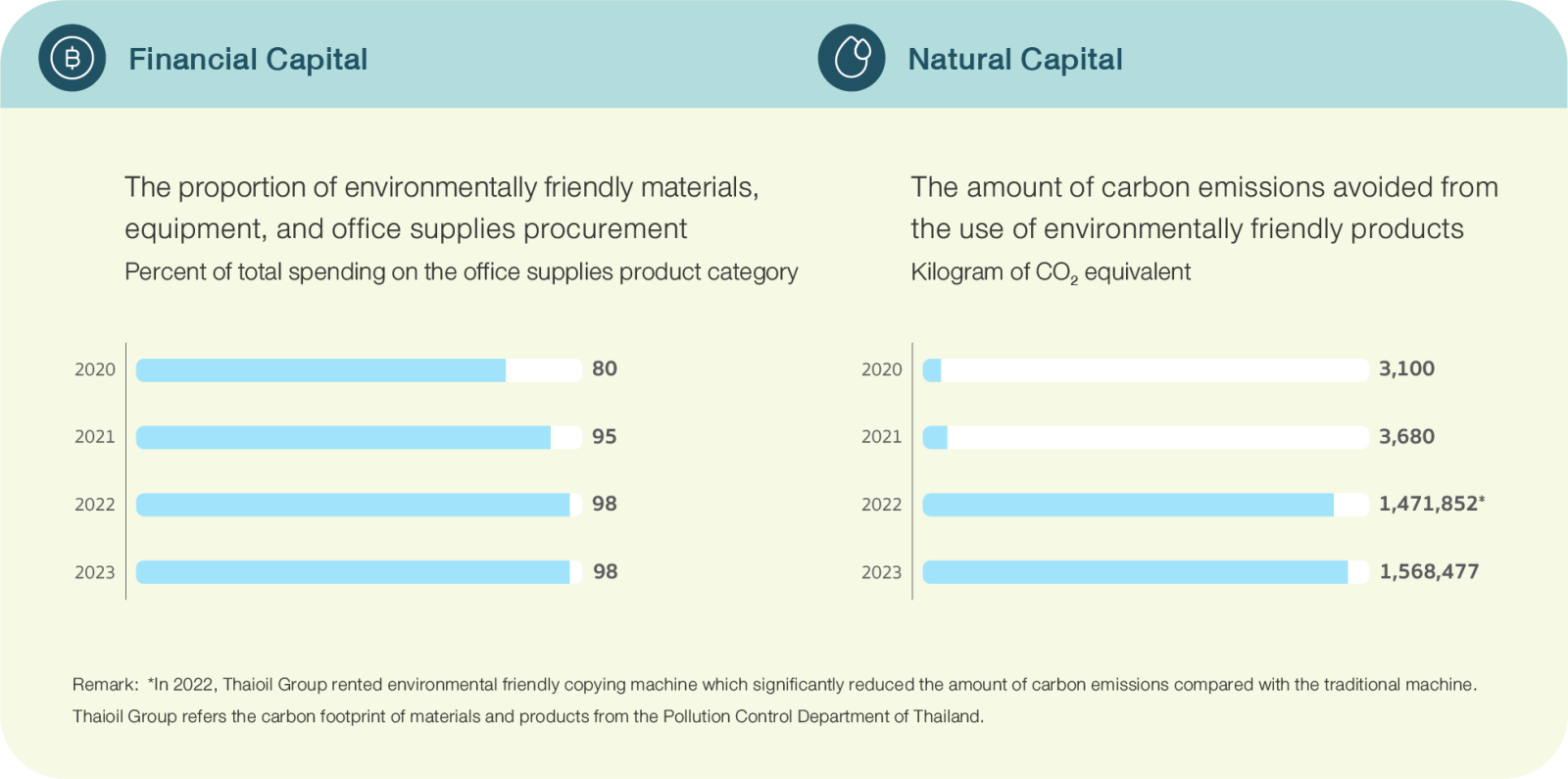
In 2024, Thaioil Group’s procurement of environmentally friendly products was 90%, which exceeds the target of 97% of total spending in this product category. In relation to this, Thaioil Group was able to avoid indirect greenhouse gas (Scope 3) of 1,852.40 tons of carbon dioxide equivalents.
Furthermore, The Company also prioritized other several products and services purchasing implementations that reduce the environmental impact. For instance, changes to use mini bus EV for employee transportation, using eco-friendly cleaning products, using energy-efficient 5-star appliances, sourcing environmentally friendly electrical control equipment, and LED explosion proof light.

Opportunities
for Upcycling
To sustainably manage waste.
To carry out projects of waste upcycling for use in the organization’s activities.
To expand the Circular Economy project for communities and society.


Industrial Waste Management
Thaioil Group has made a commitment for an efficient resource management, seeking value optimization opportunities in waste recycling, and minimizing waste disposal in waste management. The Company aims to drive performance with the target of over 100% of waste management through the 3Rs (Reduce, Reuse and Recycle) in 2024, as well as maintaining the zero waste to landfill target that has been achieving since 2020. The circular economy and the 3Rs principles were applied throughout the production processes, from upstream to downstream. The Waste Management Committee drives and governs waste management towards the target.
Waste Management Programs
Waste audits to identify opportunities for improving waste performance.
Internal audits
Thaioil waste management committee is responsible for conducting waste audits, including internal (production process) and external (waste processor) audits, to ensure compliance with regulation and proper management of collecting, transporting, treatment, and disposal.
The waste internal audit plan for TOP Group Quality, Security, Safety, Occupational Health, Environment, Energy Management (QSHE) Management System was conducted during 2023, with 79 sections under TOP Group that were audited. The waste audit aims to assess the waste management system in alignment with Integrated Management System (IMS) including ISO9001, ISO14001, ISO50001, ISO45001, TIS18001 and ISO/IEC17025, ISO/IEC27001, TIS2677, ISO20000-1. The Waste Management Committee conducts the annual meeting between working group to set target to control and monitor waste generation. The communication of waste management manual, procedure for waste disposal valuable waste and spent catalyst is regularly conveyed to operators, engineers, and new staff. The waste management target deployment and waste reduction initiative are communicated in employee Town hall to seek improvements.
Thaioil Waste Management targets in 2022-2026 is highlighted below:

Additionally, Thaioil also conducts Vendor Waste Audit to evaluate suppliers’ waste management programs in alignment with the Integrated Management System, including certificates for ISO 9001, ISO 14001, OHSAS 18001, TIS 18001, manuals, procedures, work instructions, and community complaints.
External audits
Thaioil operates its business by adhering to the internationally recognized standard and receives regular certification for environmental management systems, ISO 14001. This adherence ensures that organizations take proactive measures to minimize their environmental footprint, comply with relevant legal requirements, and achieve their environmental objectives. The framework encompasses various aspects, including resource usage, waste management, monitoring environmental performance, and involving stakeholders in environmental commitments.
Investment in innovation or R&D to minimize waste
Thaioil has partnered with the National Center for Genetic Engineering and Biotechnology (BIOTEC) to explore the utilization of bio-sludge as a source of enzymes and lipase-producing microorganisms. The initiative aims to extract valuable enzymes or microorganisms from bio-sludge prior to disposal, thereby adding value to waste materials and reducing the volume of sludge requiring disposal.
Highlighted Projects
In 2024, Thaioil Group has implemented projects across three main areas as follows:
Controlling and managing waste from the production processes through an operational excellence to minimize waste generated. For the waste generated in Thaioil Group, the 3Rs method is applied to manage and maximize the value of the waste. Examples of the initiatives are listed below:
Added value to Spent Catalyst
included 198 tons of HCU 2 spent catalyst, and 140 tons of HDS-3 spent catalyst, through Molybdenum, and Tungsten reclamation projects. The reclaimed materials can be utilized in other industries rather than being disposed of or incinerated.
Upcycled used wooden pallets from the production process
which are uncontaminated and in good condition, into furniture, such as shelves, wooden sofa seats, tables, trash bins etc. The upcycled products are then used within the Company.
Conducting research on recycle and reuse approach to increase value of office and food waste, for example:
The Thaioil Group Zero Waste Project
Aims to raise awareness and provide knowledge/training for employees and contractors in waste separation, waste reduction and waste management.
The Upcycling Plastic Waste Project
Aims to turn plastic bottles into QSHE shirts through upcycling methods. The shirts were then given to employees and contractors.
The Recycling Coffee Grounds from Akanee Coffee Shops Project
To create new products such as plant pots, home decoration, and materials for growing mushrooms (mushroom blocks). These items are then distributed to Thaioil Group’s employees, contactors, and suppliers.
Adding value to waste by turning them into community products, and providing knowledge sharing, for example:
The Circular Economy Projects
Such as fertilizers derived from community food waste to fertilize trees during events with the communities, such as the New Year Party, Children’s Day, and the Kathin Festival 2023.
The Thaioil CE School Model Project
Teach the youths about waste management processes from its origins to disposal. This includes general waste management, the process of composting waste to fertilizer, the way to recycle used oil, and basic accounting. This project was implemented in four schools located in the Laem Chabang area, namely Wat Laem Chabang School, Wat Mano Rom School, Wat Mai Nern Payom School, as well as in Children Development Center of Laem Chabang Subdistrict. Additionally, the Company organized a soap-making activity using used cooking oil and coffee grounds at Wat Laem Chabang School on July 26, 2023.
CE in Process (Circularity in Process)
The Company controls and manages waste from the production processes through an operational excellence to minimize waste generated. For the waste generated in Thaioil Group, the 3Rs method is applied to manage and maximize the value of the waste. Examples of the initiatives are listed below:
• Adding value to Spent Catalyst includes 278 tons of HDS-2/3 Spent Catalyst using for Molybdenum Reclaim, and 61 tons of Pacol Spent Catalyst using for Platinum Recovery. The reclaimed materials can be utilized in other industries rather than being disposed of or incinerated.
• Sorting insulated wooden pallets used in the production process, in good condition and free from contamination, for upcycling into furniture, such as shelves, wooden sofa sets, tables, trash bins, etc. The upcycled products are then either reused within the Company or returned to the manufacturer for further use. This initiative helps reduce the use of natural resources and avoids the need for waste incineration.
CE in Office (Circularity in Office)
Conducting research on recycle and reuse approach to increase value of office and food waste, for example:
• The Thaioil Group Zero Waste Project: it aims to raise awareness and provide knowledge for employees and contractors in waste separation and waste management.
• The Upcycling Plastic Waste Project: it aims to turn plastic bottles into QSHE shirts through upcycling methods. The shirts were then given to employees and contractors.
• The Recycling Coffee Grounds Project: it aims to recycle coffee grounds from Akanee Coffee shops to create new products for sales, such as cups, vases, scented candle warmer, plant pots.

• The Creation of Bags and Aprons from Unused Vinyl Banners Project: it aims to collect vinyl banners from various departments within the Company and transform them into bags and aprons. The project has been contributed by residents of Ban Thung community. Moreover, this project creates additional income to the community, helps reusing waste materials within the organization, and helps reducing waste disposal.

CE for Society (Circularity for Society)
The Company adds value to the waste by turning it into community products through ongoing projects as follows:
• The Company implemented an initiative to collect used cooking oil from communities surrounding its refinery, vendors at Thaioil Khlan Suk market, and Thaioil employees for conversion into biodiesel. In 2024, 544 liters of used cooking oil were collected, contributing to the reduction of clogged public drainage systems caused by the improper disposal of used cooking oil.


• The Company organized the 2024 Thaioil CE School Model Project to educate youths about waste management processes from its origins to disposal. This includes general waste management, composting waste to fertilizer, recycling used oil, and basic accounting. The project targets upper primary and lower secondary students and involves four schools located in the Laem Chabang area: Laemchabang 1 Municipality School, Laemchabang 2 Municipality (Foundation Tailong – Cheng Phornprapha) School, and Boonjitwitthaya School in Si Racha District, Chonburi Province.

2024
Performances

Remark:
(1) This includes the amount of waste remaining in the storage area at the end of the year.
Update : February 2025